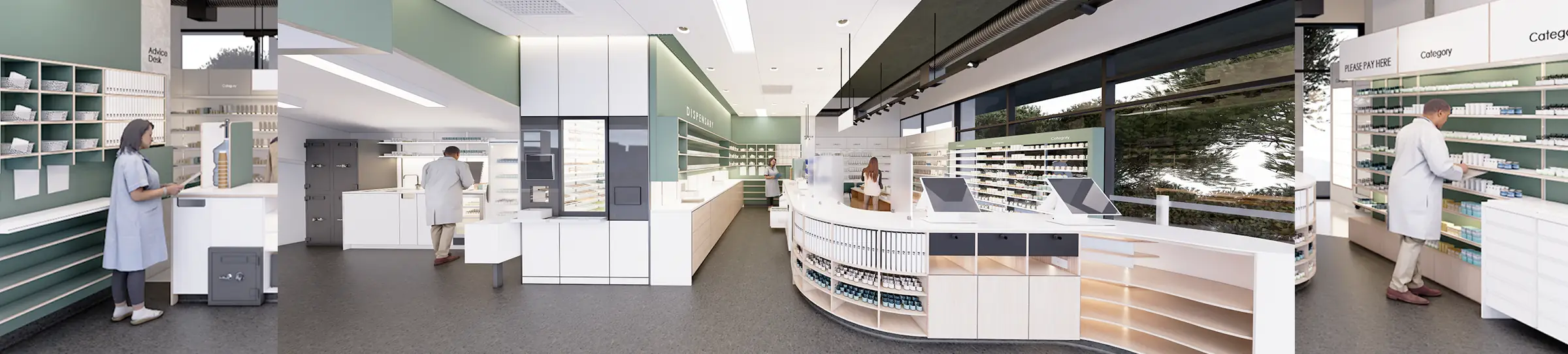
Dispensary Design

Find out how a well-designed dispensary can make your team's day easier - less movement, fewer errors, and a layout built around the way you actually work.

Bring Order to Your Dispensary

Your dispensary is busy, highly regulated, and full of dispensing and storage equipment. Is it worth spending time and resources to get it right? How often have you wished for more space, or that the right medicine pack would be exactly where you expect it? Imagine how much smoother your day would be if your dispensary had been designed correctly from the start.

We understand that lack of space, lack of personal space, untidy shelving, and misplaced items create stress and inefficiency. That is where the Design Yard 32 team comes in. We specialise in creating order in the dispensary - designing spaces that support your workflow from unpacking and stocking shelves through to dispensing and patient counselling. Talk to us about your preferred workflow today, or let us design one from scratch tailored to your pharmacy's unique needs.
Accepted Dispense Models

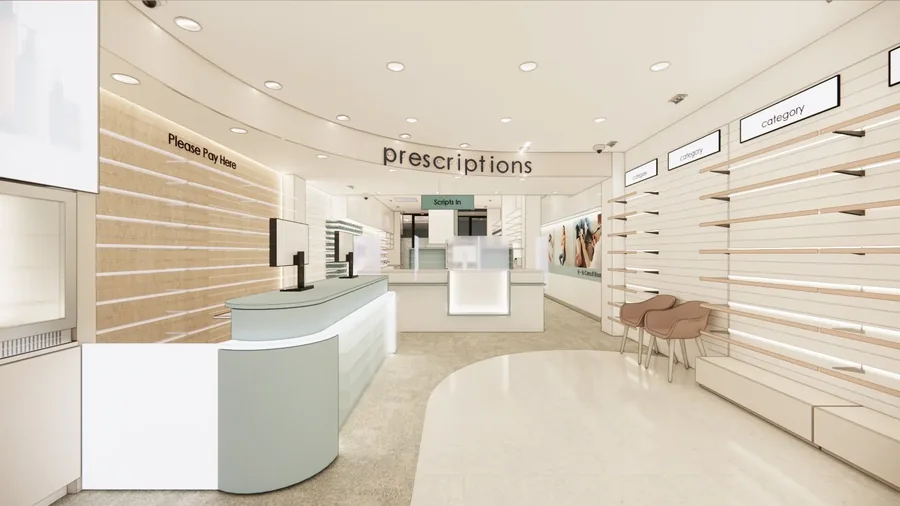
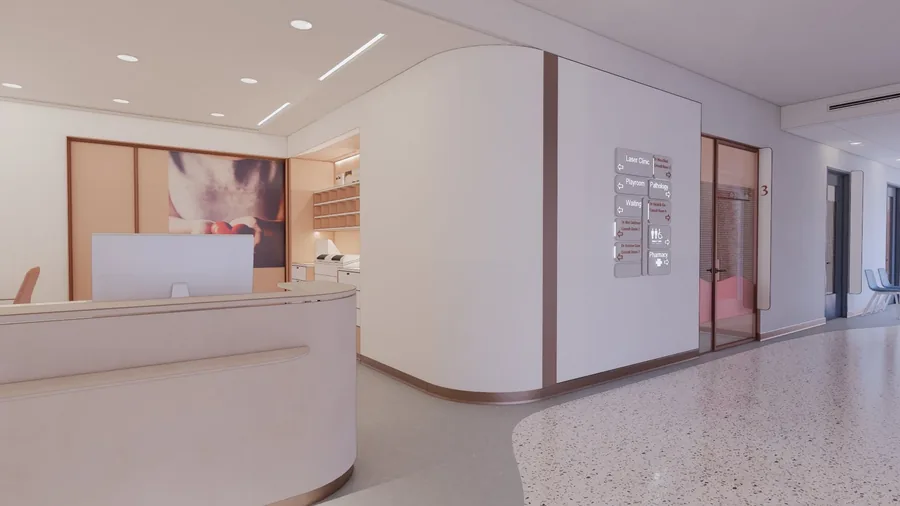
We are often asked to design dispensaries based on one of the two dispensing models commonly adopted within the Australian pharmacy industry and accepted by pharmacy authorities. Local state requirements often influence how both models can be implemented. For example, In Victoria, the Victorian Pharmacy Authority also supports both traditional and forward dispensing layouts. However, forward dispensing designs are generally required to include at least one private, traditional dispensing station to help mitigate dispensing error risks.

Our role is to carefully balance workflow, regulatory requirements, and the pharmacist's preferred dispense model - ensuring the dispensary design supports both patient care and safe professional practice in all states of Australia.

Traditional Dispense Model

The traditional model positions the pharmacist behind a defined physical barrier, primarily focused on prescription processing and medication assembly. This well-established approach supports accuracy, concentration, and workflow efficiency, allowing pharmacists to focus on safe dispensing practices. Patient interaction typically occurs at the handover stage or within dedicated consultation areas.

Forward Dispense Model

The forward dispense model is chosen by many modern pharmacies. It brings the pharmacist closer to patients by reducing physical separation between the dispensary and the retail floor. This approach encourages face-to-face interaction, strengthening patient relationships and supporting a stronger clinical and advisory role for the pharmacist. The design promotes accessibility, visibility, and personalised healthcare engagement.

Dispensary Design Planning

We take genuine pride in planning dispensary spaces, working closely with each client to develop efficient and comfortable working layouts. Within the dispensary, our key building blocks are counters, storage shelving, safes, fridges, and wet areas - each carefully arranged to support safe and efficient workflows.

Every dispensary counter has a specific purpose. Its size, position, and function are often influenced by state pharmacy authority requirements, while the internal organisation - drawers, shelving, equipment placement, and technology integration - must support daily dispensing tasks.

Ergonomics and Work Safety

Ergonomics and work safety are just as important as compliance. The dispensing workstation is the most frequently used area of the pharmacy, where easy access to medication storage, the dispensing computer, and script and labelling printers improves both efficiency and accuracy. At the same time, the pharmacist in charge must maintain clear supervision over active work areas, drug safes, and patient interactions while preserving patient privacy. Navigating these requirements while creating practical and enjoyable workspaces is a challenge we genuinely enjoy.

Statutory Pharmacy Regulations

State and territory pharmacy authority requirements influence how both models can be implemented. In Victoria, the Victorian Pharmacy Authority supports both traditional and forward dispensing layouts. However, forward dispensing designs are generally required to include at least one private, traditional dispensing station to help mitigate dispensing risks and maintain operational compliance.

Our role is to carefully balance workflow efficiency, regulatory requirements, and the pharmacist's preferred service model - ensuring the dispensary design supports both patient care and safe professional practice in all states of Australia.

After-Hours Dispensing

Some clients choose 24-hour or after-hours dispensing to provide patients with access to medications and clinical advice outside standard trading hours. To operate extended hours, pharmacies must gain approval from the relevant state pharmacy authority, demonstrating safe dispensing, pharmacist supervision, secure storage, and patient consultation arrangements.

Design plays a key role, with automated dispensing systems, secure collection points, and efficient workflows helping meet both regulatory requirements and practical operational needs.

DAA Packing and Dispensing

Many of our clients provide Dose Administration Aids (DAAs) to help patients manage complex medication schedules safely and accurately. DAA blister packing requires careful workflow planning and allocated space in the dispensary, away from distractions, to ensure accuracy, efficiency, and compliance. At Design Yard 32, we work closely with clients to organise this space thoughtfully, designing layouts that optimise workflow, minimise errors, and support smooth daily operations.

Dispensary Shelving & Storage

Australian pharmacies have access to an impressive range of dispensary fittings - from pull-out angled drug shelving and specialised drawers to DAA storage, slatwall systems, automated storage units, and dispensing robots. With so many options available, choosing the right solution can quickly become overwhelming.

At Design Yard 32, we help pharmacy owners navigate these choices independently - focusing on what category suits your workflow, space, and future growth rather than promoting specific equipment or suppliers. Our role is to plan dispensaries that work today while allowing for future upgrades without disrupting operations.

A well-designed dispensary is built from carefully coordinated elements: workstations, storage systems, safes, and wet areas - all arranged to support safe, efficient daily operations. Every counter, drawer, and storage decision plays a role in how smoothly prescriptions move through the space. For a detailed guide on dispensary and retail shelving options, visit our Pharmacy Shelving page.

Robotics in Dispensary Design

Dispensing robotics become an integrated part of modern dispensary design, improving efficiency, stock control, and prescription accuracy. At Design Yard 32, we design your chosen dispensing robot into the dispensary layout from the earliest design stage. These systems are typically comparable in size to a small room and significantly influence space planning, structural loading, ceiling height, service access, and staff circulation.

Careful coordination with dispensing counters, pharmacist supervision zones, and patient interaction areas is essential to ensure smooth workflow and safe operation. Successful integration considers medication storage capacity, replenishment access, noise management, ventilation requirements, and long-term service access for maintenance.

Correct positioning reduces unnecessary staff movement, supports safer dispensing processes, and allows pharmacists to focus more on patient care rather than stock handling. Our design approach creates a balanced dispensary environment where automation enhances professional practice while maintaining flexibility for future upgrades as pharmacy technology continues to evolve.

Methadone Dispensing

Many community pharmacies now provide opioid pharmacotherapy services, including methadone and buprenorphine dispensing. These programs introduce specific requirements around secure storage, supervised dosing, patient privacy, and controlled workflow design that differ from standard dispensary layouts.

We design pharmacotherapy-ready pharmacies that balance compliance, safety, and patient dignity. Learn more about our dedicated Methadone Dispensing Pharmacy Design services.

Dispensary Compliance

Most pharmacy compliance requirements sit within the dispensary area, where operational planning and regulatory controls intersect. Each Australian state operates under its own pharmacy authority guidelines, influencing how dispensaries are planned and approved. Key considerations include the placement of safes and scheduled drug storage, protection of patient information, privacy during dispensing and consultation, visibility control of labelled medicines, and minimum space requirements for dispensary workstations. We work across all Australian states and navigate these regulatory differences to ensure each project meets local compliance requirements while maintaining efficient daily operations. Check our Pharmacy Compliance page for more industry insights and state by state compliance.

Cannabis Dispensary Design

From a regulatory and establishment perspective, a medicinal cannabis dispensary operates as a pharmacy and is subject to the same core approvals and compliance requirements. However, operational differences influence planning and layout - including secure handling, delivery and unpacking processes, controlled storage, enhanced dispensary security, and a strong focus on patient privacy. Visit our Medicinal Cannabis Dispensary page for a full overview of design considerations specific to this specialist pharmacy environment.

Areas of Expertise

Contact Us

Frequently Asked Questions - Dispensary Design

  • Workflow efficiency is the single most important factor. A well-designed dispensary minimises unnecessary movement, reduces the risk of dispensing errors, and allows pharmacists and technicians to work comfortably under high prescription volumes. This requires careful consideration of counter placement, storage positioning, equipment integration, and supervision sight lines - all of which we plan from first principles for every project.

  • A traditional dispensing model positions the pharmacist behind a physical barrier, with the dispensary clearly separated from the retail floor. A forward dispensing model reduces that separation, bringing the pharmacist closer to patients to support advisory and clinical interactions. Both models are used in Australian pharmacies, and the right choice depends on your service model, prescription volume, team structure, and state pharmacy authority requirements. We help you select and design the model that fits your practice.

  • The appropriate dispensary size depends on prescription volume, the number of dispensary staff, services offered, and whether automation or compounding facilities are involved. A small community dispensary may operate effectively in 20–30m², while a high-volume dispensary with robotics, DAA facilities, and pharmacotherapy services may require significantly more. We assess your current and anticipated throughput carefully before recommending a layout.

  • Yes - dispensing robots can be retrofitted into existing pharmacies, but careful assessment is needed first. Space requirements, ceiling height, structural loading, and electrical capacity must all be evaluated. We integrate automation planning from the earliest design stage to ensure the robot is correctly positioned relative to dispensing counters, replenishment access, and pharmacist supervision zones, avoiding costly modifications after installation.

  • Best practice strongly supports allocating a dedicated, separated area for DAA blister packing, away from the main dispensing workflow. The accuracy required for DAA packing is best supported by a calm, distraction-free workspace. State pharmacy authorities and professional standards increasingly reflect this expectation. We integrate DAA planning into every dispensary layout from the outset.

  • Poorly designed dispensaries contribute directly to physical strain, cognitive load, and staff frustration. Ergonomic counter heights, well-positioned medication storage, logical workflow sequencing, and appropriate lighting all reduce the physical and mental demands of high-volume dispensing. A well-designed dispensary makes a tangible difference to staff retention and daily job satisfaction - considerations we take seriously in every project.

What type of project can we help you with?