Hair & Beauty Salon Fitout Melbourne
Hair salons, beauty clinics, laser clinics, nail bars, barber shops, and day spas across Melbourne - designed to run smoothly, look great, and keep clients coming back.
Designed by Someone Who Understands Salon Work
Designing a beauty salon well requires more than an eye for aesthetics. It requires an understanding of how services are delivered throughout a full working day, how staff move and work across different services, and what clients experience from the moment they walk through the door to the moment they leave.
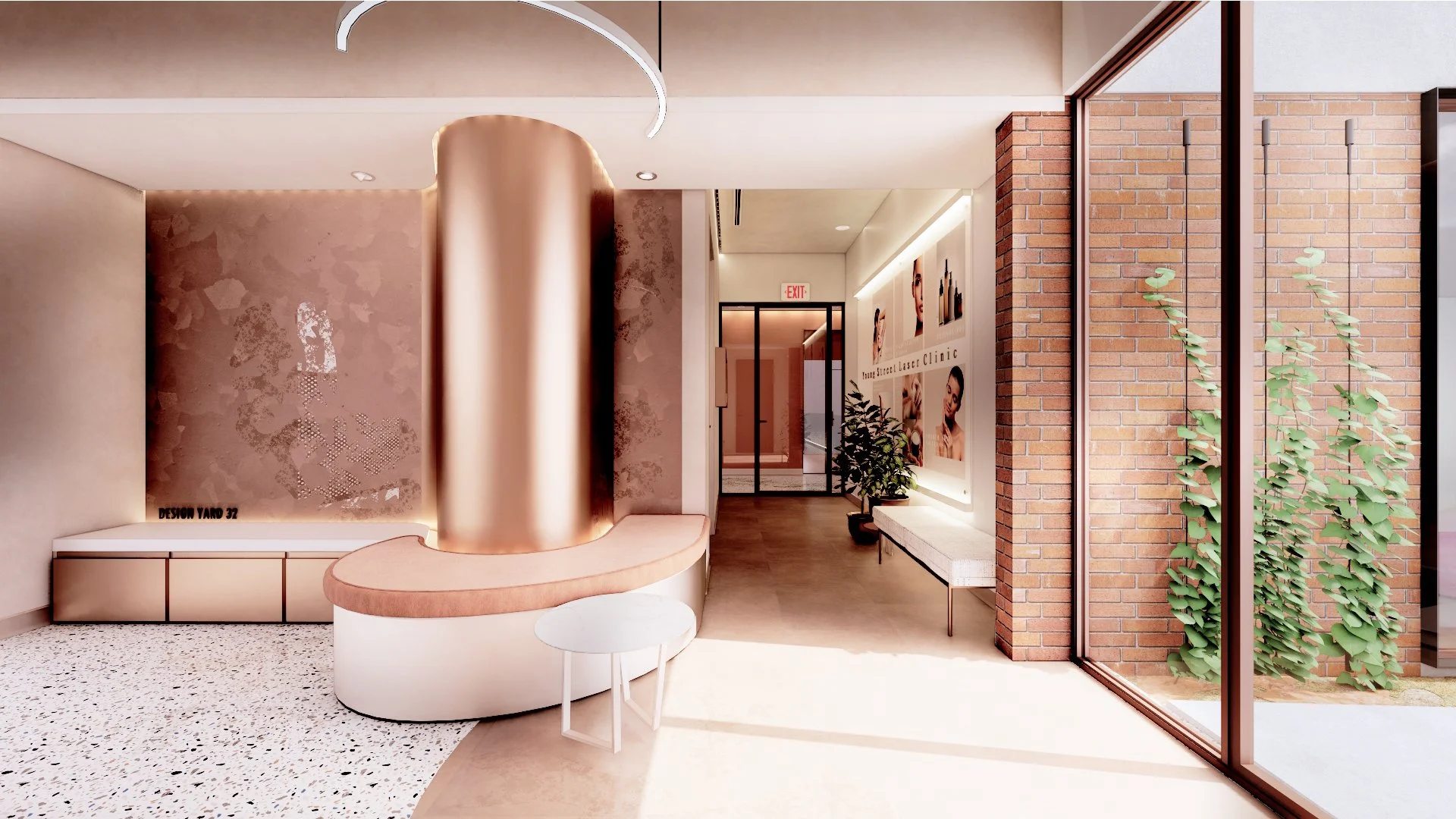
At Design Yard 32, our principal designer Tanya brings direct experience as both a professional designer and a beauty and salon client - giving our team an insight into these environments that most design practices simply do not have. For laser clinics and cosmetic treatment rooms, we bring in specialist expertise on ventilation, surface requirements, and layout - so the design meets the specific needs that apply to these spaces. We understand the demands of a treatment room, the flow of a busy hair salon floor, and the atmosphere that converts a first-time visitor into a loyal returning client.
Every fitout we design starts with the same question: what feeling do you want your space to evoke? From that brief, we build a design that serves your brand, your service menu, and the people who work in your salon every day.
Beauty Salon Design Services
Workflow & Space Layout
3D Concept Design
Tender Package For Pricing
Builders Documentation
What Separates a Good Salon Fitout from One That Actually Works
The most consistent problem in beauty salon fitouts is that the design was led by aesthetics before operations were resolved. The result is a space that photographs well but is exhausting to work in - poor ergonomics, insufficient storage, inadequate power and data outlets, lighting that undermines treatment quality, and circulation paths that create constant friction between staff and clients.
A well-designed salon resolves both demands. The layout defines clear, unobstructed paths for client movement from entry to treatment areas, and separate paths for staff accessing stock and utilities. Ergonomic working heights are designed for the actual services being delivered - a styling station has different height and reach requirements to a treatment bed, a nail technician station, or a laser clinic couch. Treatment rooms are positioned to control sound between spaces. Lighting is designed for the work being done: bright and precise over treatment zones, ambient and flattering at reception and styling.
We also design for the details clients do not consciously register but that shape their overall experience - the ease of entering and navigating the space, the privacy of treatment rooms, the sound separation between rooms, and the surfaces and finishes that signal cleanliness in treatment areas and warm professionalism in reception and retail zones. Carefully placed lighting can evoke comfort and calmness, or excitement and energy - it all depends on your brief and our expertise. These are the details that build client loyalty over time.
Hair Salon Fitout & Design
Hair salon fitout is one of the most practical design challenges in the beauty sector. The layout needs to manage high client throughput, concurrent service delivery across multiple stations, and the logistical demands of colour work - mixing, application, development, and backwash - all within a space that usually operates under significant time pressure.
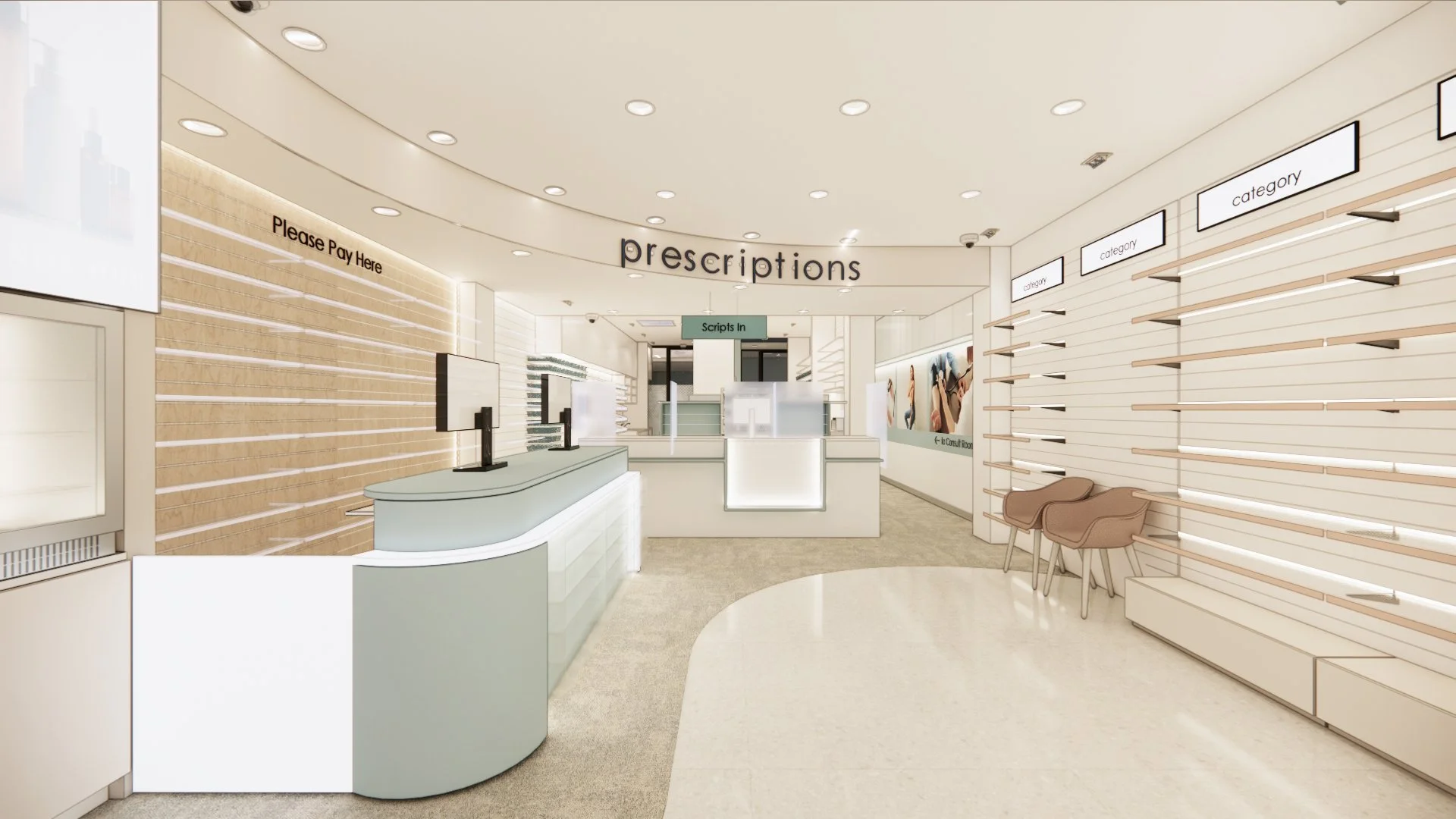
We design hair salons around operational efficiency first: the sequence from reception to gown, from colour consultation to application station, from styling chair to backwash and back. Styling station spacing, backwash area sizing, colour mixing room layout, retail display positioning, and reception desk placement all affect how smoothly a salon operates under full load.
Beyond the operational framework, we design the material palette, joinery, feature walls, and lighting that give a hair salon its identity. The styling area and reception are the two spaces clients spend the most time looking at - and the spaces that most directly communicate the quality of the brand.
Beauty Salons, Skin Clinics & Laser Clinics
Beauty salon and skin clinic design centres on treatment rooms - how many you need, their size, layout, and how well sound is separated from other rooms and from reception.
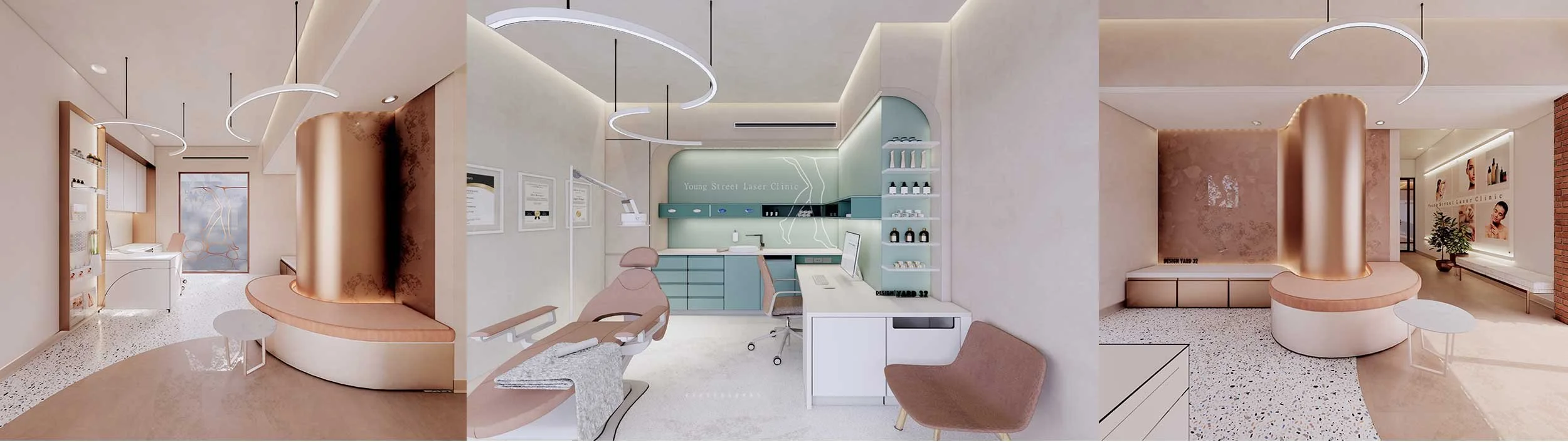
A typical beauty treatment room needs a treatment bed with full access on both long sides and at the foot, adequate storage for products and equipment, a clinical sink where required for hygiene compliance, appropriate lighting for skin assessment and treatment delivery, and acoustic separation sufficient to give clients privacy during consultations.
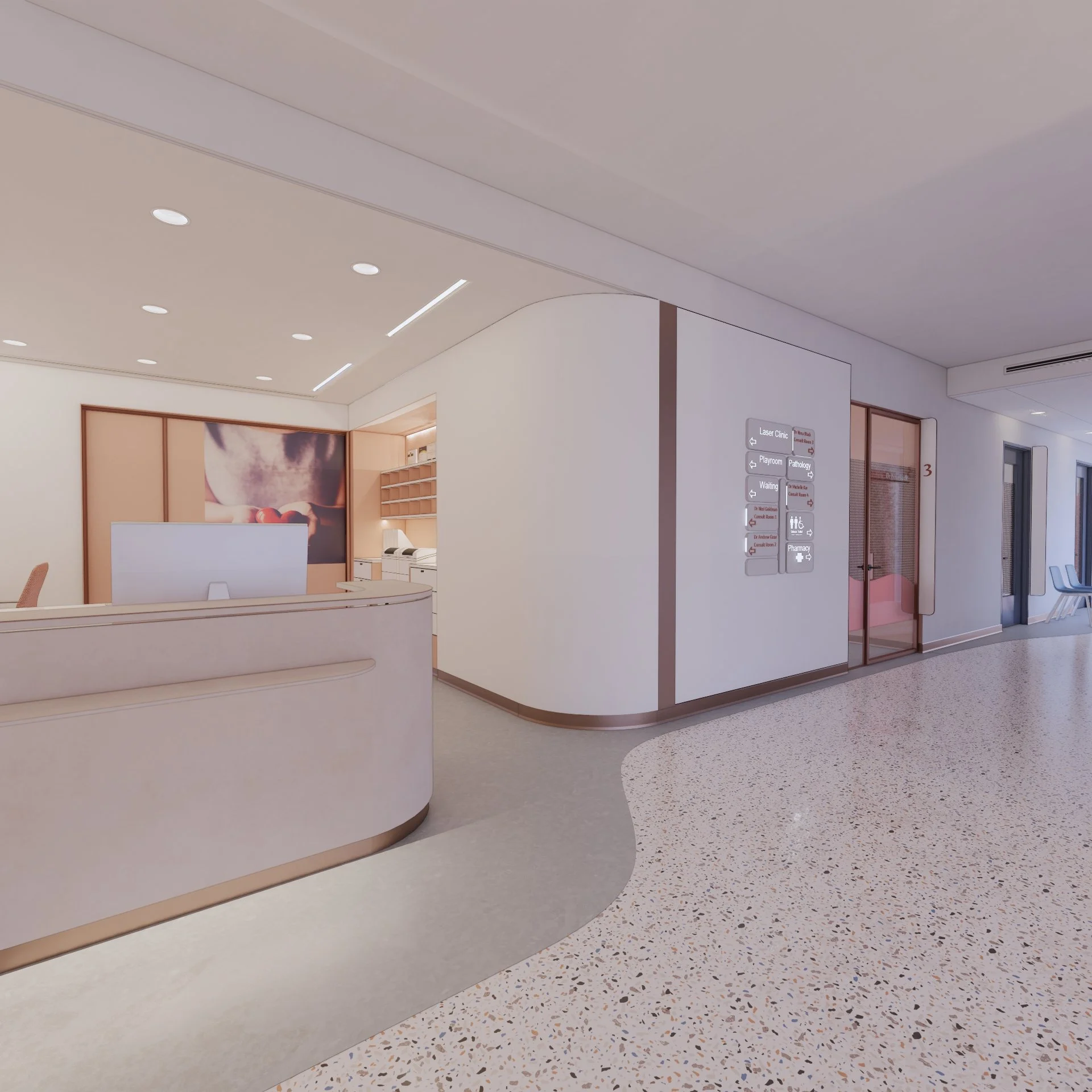
Laser and cosmetic clinics have additional requirements: ergonomic positioning for the therapist relative to the treatment area, compliant surfaces that are easy to clean to clinical standards, controlled lighting that supports accurate skin assessment while maintaining client comfort, and storage for clinical equipment that keeps the room uncluttered and professional. We are familiar with the surface, ventilation, and layout considerations that apply to regulated cosmetic treatment environments.
Nail Salons & Nail Bars
Nail salon design has specific challenges around station spacing, ventilation, and how comfortable it is for nail technicians to work - things that are often underestimated.
Nail technicians work in the same position for long stretches of time - the height of the work surface, knee clearance, and seat height at each station all affect how comfortable they are across a full day. Client seating needs to support relaxed positioning during potentially long service times.
Ventilation deserves particular attention in nail environments. The products used in nail services - acrylics, gels, acetone - require adequate fresh air exchange and, in enclosed premises, extraction systems that prevent chemical accumulation. We design ventilation into nail salon fitouts from the outset rather than treating it as an afterthought.
Product display, retail layout, and the visual experience at reception and client-facing zones complete the design - ensuring that the business side of the salon performs as well as the service delivery side.
Barber Shop Fitout & Design
Barber shop fitout shares some characteristics with hair salon design but has a distinct operational and aesthetic logic.
Barber chairs are typically lined along one or both walls with mirrors - the layout and mirror positioning determine the room's proportions and visual rhythm. Station spacing, chair swivel clearance, and barbering trolley positioning all need to be resolved in the floor plan before the aesthetics can be designed around them.
Barber shop design in Melbourne has evolved significantly in recent years - moving from basic functional layouts toward considered environments that serve as part of the brand identity and client experience. Feature walls, curated joinery, lighting tone, and the selection of finishes all contribute to an atmosphere that encourages clients to return and refer.
We design barber fitouts that balance operational efficiency - the fundamentals of chair spacing, circulation, backwash access, and product storage - with the aesthetic character that differentiates a good barber shop in a competitive market.
Day Spas & Wellness Studios
Day spa and wellness studio design is distinct from salon design in one key respect: the experience is the product. Clients are not simply receiving a service - they are entering an environment specifically designed to disconnect them from daily pressure. Every design decision either supports or undermines that outcome.
Acoustic design is the most critical technical consideration: sound transfer between treatment rooms, from corridors, or from reception must be controlled to a standard that most commercial fitout contractors do not achieve without specific design direction. Entry sequencing - the transition from street level to reception to treatment areas - matters because it sets the client's emotional register before a single service begins.
We design day spa and wellness environments around the full client journey, including relaxation lounges, treatment rooms, change and shower facilities, hydrotherapy and sauna spaces where included, and the material palette and lighting that creates the experience the brand promises.
Infrastructure for Salon Fitouts: Power, Data, Plumbing & Ventilation
One of the most common and costly mistakes in beauty salon fitouts is inadequate infrastructure planning - specifically, not enough power, no thought for future equipment expansion, and plumbing or ventilation resolved as afterthoughts.
Power and data provision needs to be designed for the services you deliver today and the services you are likely to offer in three to five years. Styling stations need power points at the right working height. Treatment rooms require power for beds, lamps, and equipment. Laser and IPL devices draw significant current and may require dedicated circuits. Nail stations require power and adequate ventilation extract. Underpowering a salon during the fitout is one of the most expensive things to fix later.
Plumbing requirements vary by salon type - backwash basins in hair salons, hand basins in treatment rooms (required for hygiene compliance in treatment environments), wet areas in day spa change rooms and hydrotherapy spaces. Getting plumbing rough-in positions right during construction is critical; moving them post-fitout is costly and disruptive.
Ventilation matters in every salon environment and is critical in laser clinics and nail environments where products or equipment generate fumes, heat, or particulates. We coordinate power, data, plumbing, and ventilation within the design documentation - so your builder, electrician, and plumber all work from the same set of instructions.
From Brief to Opening Day - The Fitout Process
The design phase typically takes three to six weeks, depending on the size and complexity of the salon and the number of design review rounds. This phase produces a concept layout, 3D visualisations, material and finishes selections, and documentation for builder pricing.
The approval phase - building permit or fitout certification - typically adds two to four weeks once documentation is complete, depending on the state and the scope of works. Some straightforward fitouts in existing tenancies may not require a permit, but any works involving structural changes, wet area installations, or essential services modifications will.
Construction for a small salon fitout (under 100m²) typically takes four to eight weeks from site commencement; larger or more complex fitouts take longer. The overall timeline from initial brief to opening day is typically twelve to twenty weeks for a standard salon project.
We discuss realistic timelines with every client at the outset and prepare documentation that supports an efficient approvals and construction process.
Approvals and Compliance
Commercial beauty salon fitouts typically require a fitout certification or building permit under the National Construction Code, depending on the scope and the state. Where structural changes, wet area installations, or essential services modifications are involved, the approval pathway is identified early in the design process and we assist with the documentation and submission.
For laser clinics and cosmetic treatment premises, we are familiar with the special considerations relevant to clinical environments - including surface finishes, ventilation, and layout requirements that apply to these spaces under health authority standards.
Where council approvals are required for signage, shopfront modifications, or change of use, we prepare the relevant submissions and assist the client through the approval process.
Contact Us
Frequently Asked Questions - Beauty Salon Fitout
-
How people move through your salon comes first - clear paths for clients, and separate paths for staff getting to stock and supplies. After that, the priorities are comfortable working heights for each service, enough power and data at every station and treatment point, good sound separation between treatment rooms, and storage where it is actually needed. Aesthetics are built on top of this - the most beautiful salons are the ones that work well first.
-
Beauty salon fitout costs vary considerably depending on the size of the tenancy, the level of finish, the number of treatment rooms, the complexity of wet area installations, and whether structural modifications are required. State, location, and builder availability also affect cost. We assist clients in developing a realistic fitout budget as part of the early design process and prepare tender documentation that allows builders to price the project accurately and competitively, so you can make informed comparisons between quotes.
-
Yes. Barber shop fitout is part of our service offering. We design barber shops across the full spectrum of scale - from a compact single-operator space to a multi-chair shop with private rooms. Our approach to barber design resolves station spacing, mirror and lighting positioning, circulation, storage, and the aesthetic character that defines the brand, then documents the design to the standard required for builder pricing and approval.
-
Not enough power is the most consistent issue - salons regularly run out of power points within the first year as equipment grows. After that, the most common problems are poor soundproofing between treatment rooms, working heights set for one person rather than the whole team, and ventilation treated as an afterthought in nail and laser environments. We review all of these as part of the design process.
-
For treatment rooms where skin assessment is part of the service, pale whites, warm greys, and soft neutrals reflect light evenly and avoid casting colour onto the client's skin - which matters significantly in skin treatment and colour correction work. Heavily saturated colours in styling areas can distort how clients perceive their hair colour result. We advise on colour selection as part of the design process and test final choices under your actual lighting conditions before any decisions are locked in.
-
Common work hazards in beauty salons, which can be minimised through thoughtful design and planning, include: tripping over cords, electrical cables, or floor humps; slips and falls on wet or oiled surfaces; inhaling fumes, powders, or mould; unnecessary strain on the back and arms; mild electrical shocks; and risks to overall staff safety.
-
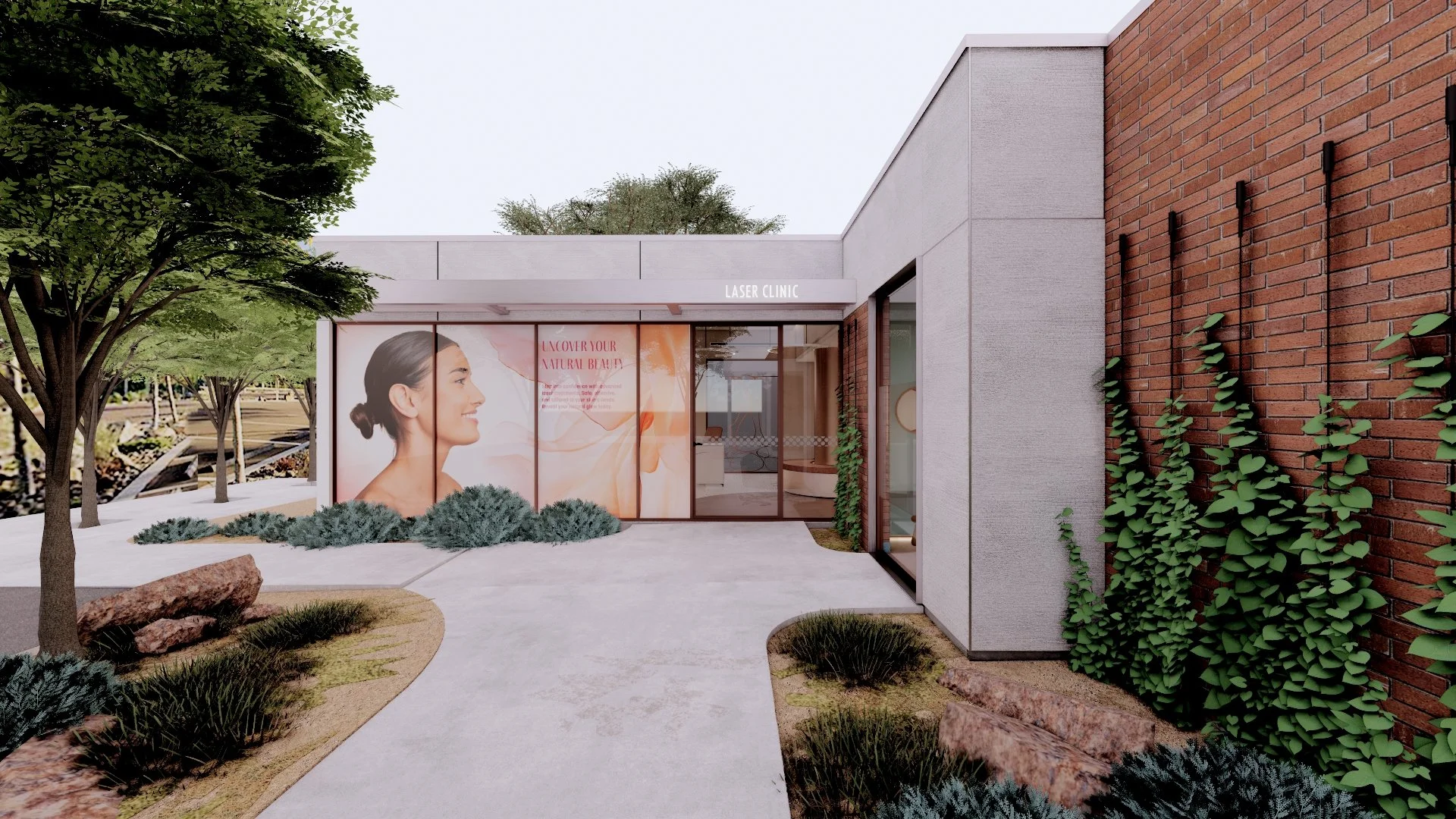
Yes. Signage, shopfront, and fascia design are part of our commercial fitout service. We design the exterior as part of the full client experience, ensuring it reflects the brand and meets council requirements. Where council approval is required for signage or shopfront changes, we prepare the relevant submissions and assist the client through the approval process.
-
Yes. Where a building permit or fitout certification is required, we prepare the documentation - including drawings, specifications, and any engineering required - and assist with the submission process. We also assist with council submissions for signage and change-of-use approvals where applicable. The approval requirements for your specific tenancy and scope of works are identified at the start of the project, so there are no unexpected delays once construction is ready to begin.
What type of project can we help you with?