Shop Fitout Melbourne
Boutiques, fashion retailers, shopfronts, and specialty stores across Australia - designed around your brand, your product, and how customers move through your space.
Designed Around Your Retail Brand
Designing a retail space well is not simply about making it look good. It is about creating an environment that moves customers through the store, keeps them engaged with the product, and communicates the brand through every material, fixture, and lighting choice.
At Design Yard 32, we design retail fitouts for diverse retailers and specialty businesses across Australia. We work with clients from the first brief through to construction, supporting your chosen builder on site - covering space planning, 3D visualisation, joinery design, shopfront and facade, and the full documentation set your builder needs to price and build the project accurately.
Our work covers independent boutiques, fashion retailers, specialty food and lifestyle stores, professional service offices with a retail presence, and mixed-use tenancies where retail and another function need to work together in the same space.
Retail Fitout Design Services
Workflow & Space Layout
3D Concept Design
Tender Package For Pricing
Builders Documentation
What Makes a Retail Fitout Work
The most common problem in retail fitouts is that the layout was not resolved before the aesthetics. The result is a space that looks good in the render but is hard to work in - poor sightlines from the counter, awkward circulation paths, display fixtures placed for density rather than customer engagement, and not enough power or data where the business needs it.
A well-designed retail space works out how it will function before anything else. The customer path from entry to each product zone needs to be clear and natural. Product display needs to work at the right eye level, with the right lighting, at a density that invites browsing rather than overwhelming it. The counter and point-of-sale position needs clear sightlines across the floor. Staff need access to back-of-house, stockroom, and fitting rooms without crossing the customer path. A well-designed retail fitout also allows for flexibility, so layouts can be adjusted or reused as tenant needs change or insights from retail analytics and customer tracking become available.
Every one of these decisions is made in the floor plan, before anything is built. Getting them right at this stage costs nothing. Getting them wrong and fixing them during construction is expensive.
Boutique & Fashion Retail Fitout
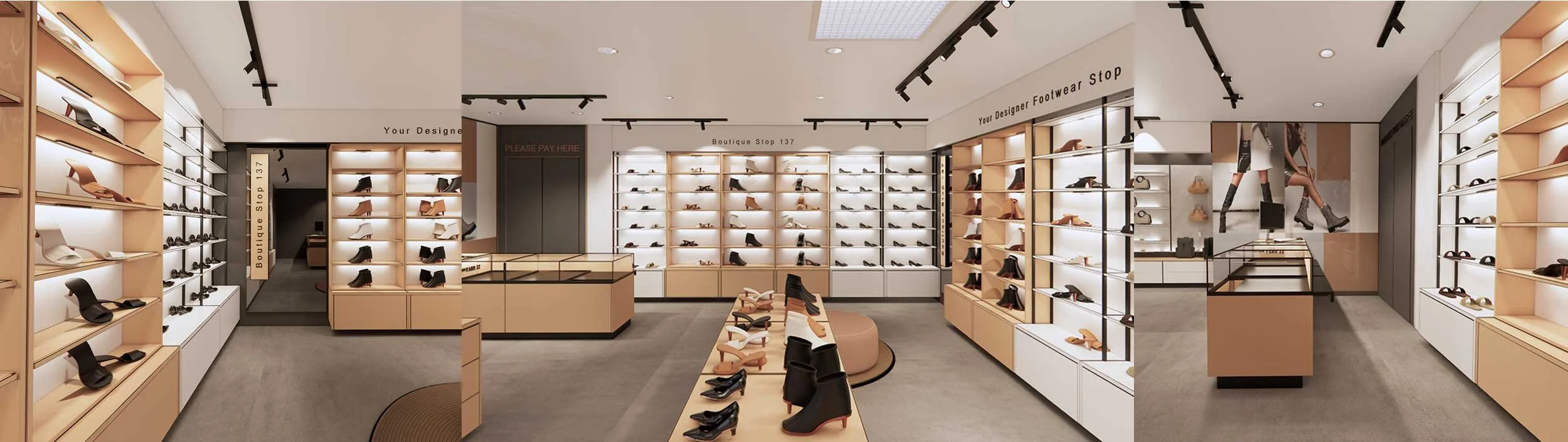
Boutique and fashion retail fitout centres on product presentation, fitting room design, and creating an environment that communicates the brand at every level - from the shopfront through to the fitting room experience.
Layout for fashion retail needs to resolve how many units and rails fit the floor without overcrowding, where fitting rooms sit in relation to the sales floor and the counter, which products get the most prominent positions, and how customers move from the entry display to the full range and on to the point of sale.
Joinery is the most significant investment in most boutique fitouts - display units, wall-mounted rail systems, shelving, the counter, and any display windows. We design bespoke joinery for the specific tenancy, the brand direction, and the product range, then document it to the standard required for cabinet maker pricing.
Shopfront, window display, and facade design are part of our retail fitout service. The shopfront is the first brand statement a potential customer sees - and the reason they walk in or walk past. We design shopfronts that connect visually to the interior brand and meet council requirements for signage and facade treatment.
Food & Grocery Retail Fitouts
Food and grocery fitouts have unique operational and regulatory requirements that go beyond typical retail. Layouts must support efficient customer flow while allowing staff to access stockrooms, refrigerated areas, and back-of-house without disrupting shoppers. Specialist services such as refrigeration, cold rooms, food-safe surfaces, and appropriate mechanical ventilation must be coordinated from the outset, alongside lighting and power designed for both compliance and energy efficiency. Like boutique retail, the success of a grocery or food store depends on a well-planned layout before aesthetics, ensuring products are displayed at eye level, sightlines are clear, and customer circulation encourages browsing and purchase. Flexible designs that anticipate seasonal changes, promotions, or future expansions help minimise disruption and get more out of the investment.
Retail Stores Serving Drink and Food
If you are a specialty store exploring ways to increase customer visits or encourage them to stay and try your products, adding coffee or food service can be a great option. This approach has proven popular in bookstores around the world, large retailers with ample floor space, and has become a standard feature in many Australian bakery fitouts. Layouts must balance customer browsing with safe and efficient staff access to service areas, refrigerated displays, and food preparation zones. Our designs prioritise functionality, compliance, and energy-efficient services, while creating flexible layouts that support product display, customer engagement, and smooth day-to-day operations. You will also need to obtain the appropriate food business registration or licence, which varies by local council, to legally prepare and serve food on-site. You can visit our Hospitality Design page for more information on cafe and food service design.
Health & Wellness Retail Stores
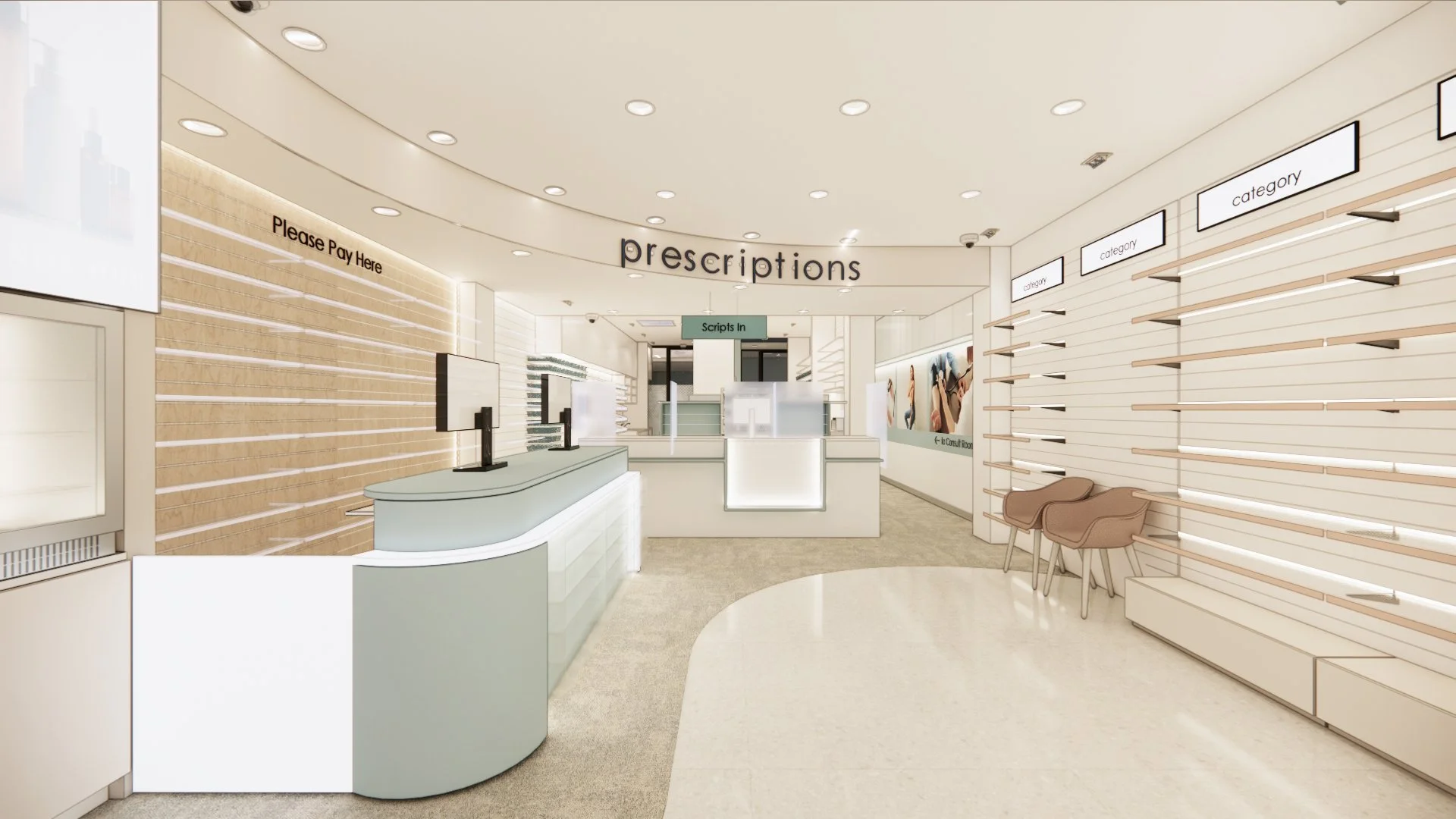
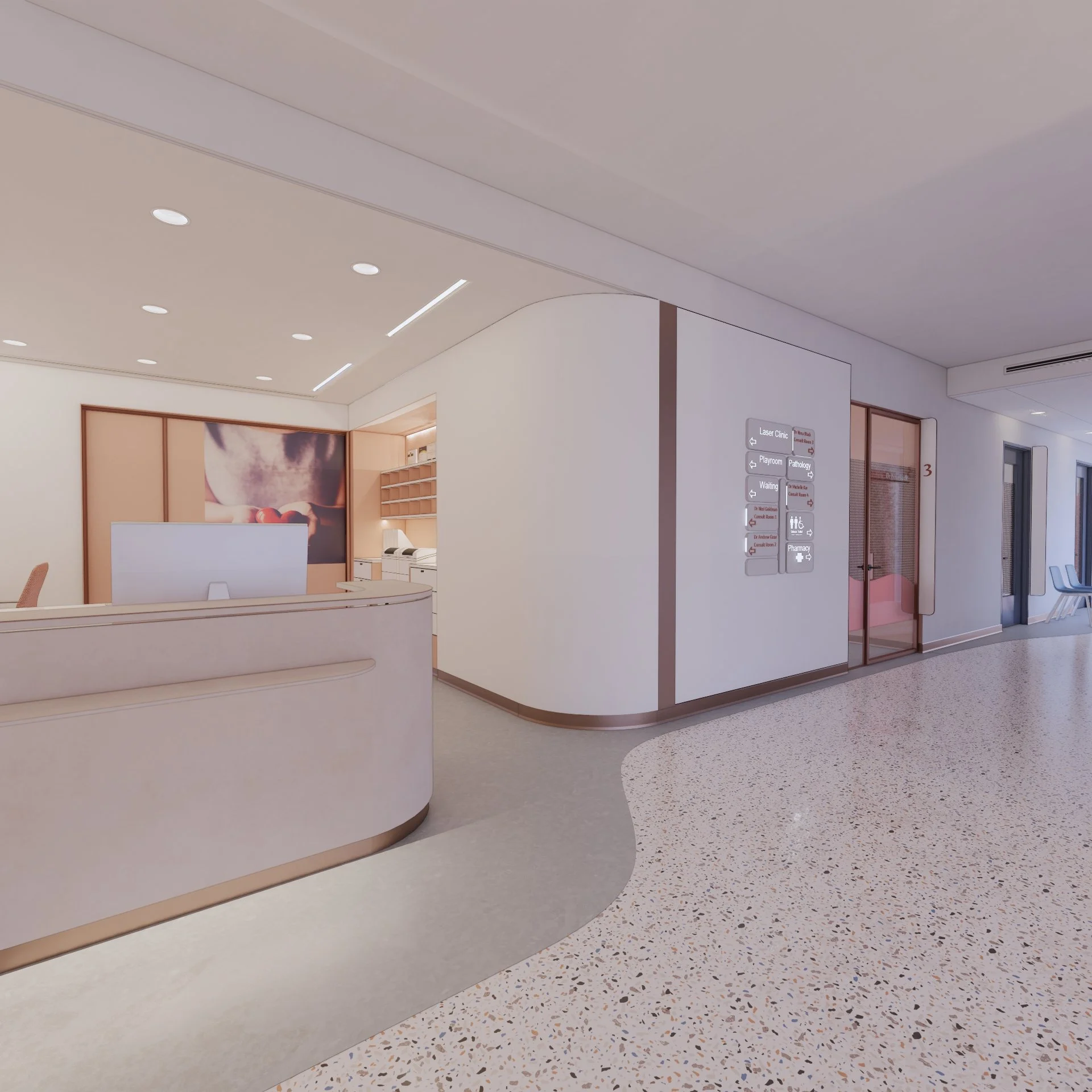
Stores selling health-related products, supplements, or natural remedies require layouts that combine clear customer flow with easy access to staff for guidance and advice. For pharmacies, specialised dispensary areas, compliance with health regulations, and careful planning of storage, counters, and customer sightlines are essential. Our designs prioritise functionality, regulatory compliance, and operational efficiency while creating flexible layouts that support both product display and a positive customer experience. If you are planning a retail pharmacy, you can visit our Pharmacy Design page for more information on specialised pharmacy design.
Shopfront & Facade Design
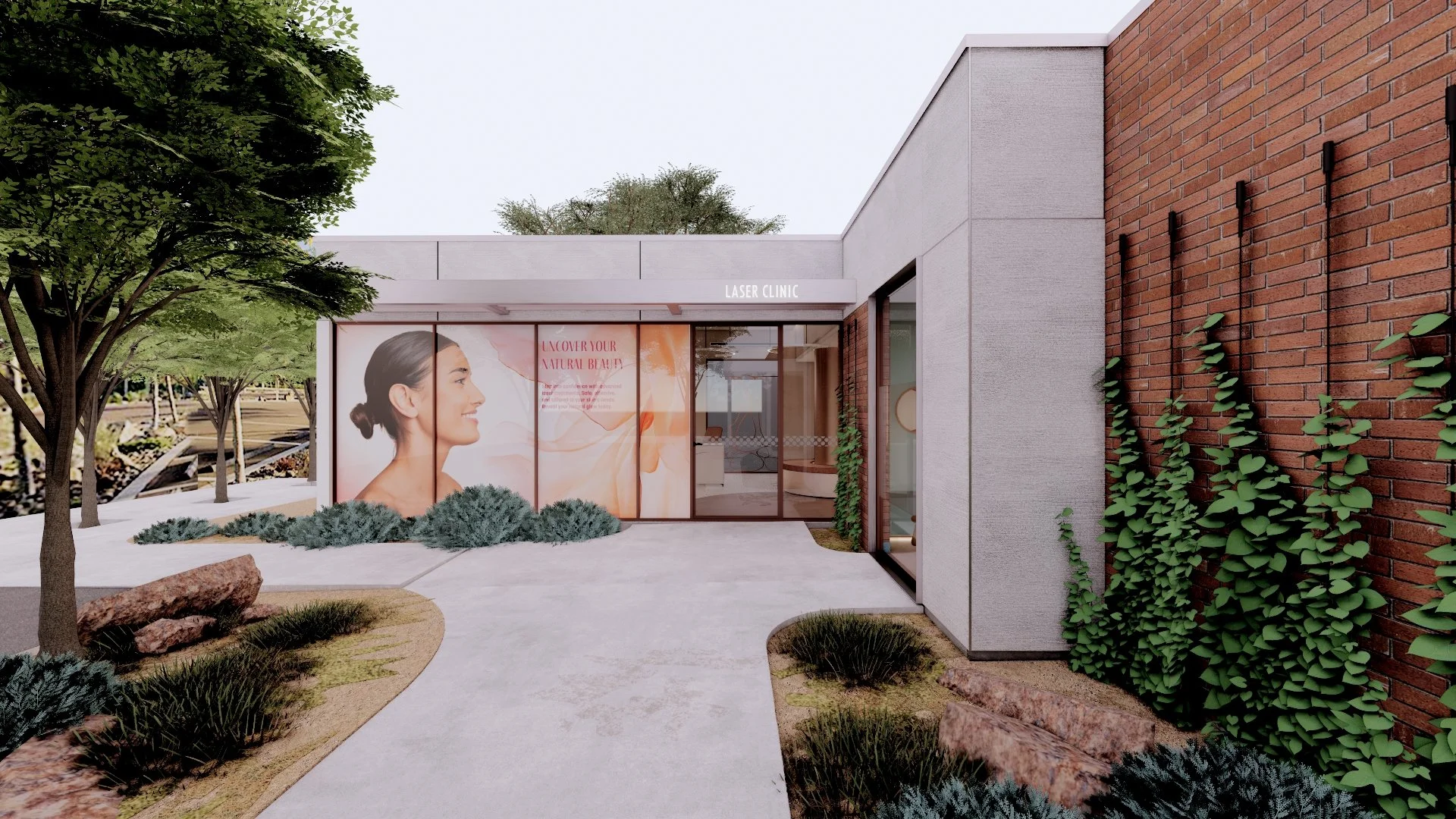
The shopfront is the most visible part of a retail fitout and the first signal to a passing customer. At Design Yard 32, we approach shopfronts and facades as a key part of the overall design - not a separate element - ensuring a seamless connection from the street into the interior.
Signage is a key component of this design. It cannot be treated as an isolated or outsourced element if a consistent, polished result is expected. Close collaboration between the designer and signage fabrication specialists ensures the design is followed through to production and installation.
This partnership allows signage to achieve both visual elegance and practical performance, whether through anti-vandal finishes, semi-transparent graphics, or full block-out treatments. Power provision for illuminated signage is incorporated from the outset, so function and look are aligned.
Where council approval is required for changes to the shopfront, facade, or signage, we prepare the relevant submissions and guide the client through the process. Requirements vary by council and site-specific planning controls, which we identify at the start of each project.
Lighting, Power & Services
Lighting is the most commercially significant infrastructure decision in a retail fitout. Product lighting - the light that falls directly on merchandise - determines how colour reads, how textures register, and how attractive the product looks to a customer. Getting this wrong is not something that can be fixed by changing a fitting; it requires relocating circuits and tracks, which means opening up the ceiling.
We design layered lighting as part of every retail fitout: ambient lighting for the overall space, accent lighting for featured product and displays, task lighting at the counter and workstations, and window lighting that draws attention to the shopfront display from the street at night.
Power and data provision needs to be designed for how the business operates today and how it is likely to grow. Retail fitouts need power at the counter (POS, EFTPOS, printer, security system), at display positions, and at any stockroom workstations. Data points for POS, EFTPOS, and in-store devices need to be at the right working locations.
HVAC is often not given enough attention in retail fitouts. A store that is too hot or too cold moves customers toward the exit. We coordinate HVAC requirements with your builder or mechanical contractor from the outset so there is enough capacity and the right zones are covered.
At Design Yard 32, lighting and power layouts are developed with energy efficiency in mind, considering lighting power allowances per square metre in line with the National Construction Code requirements for commercial spaces.
The Fitout Process and Fitout Approvals
A typical fitout process starts once you’ve approved the tenancy and shared your design brief. We conduct an initial site survey to understand the existing conditions, measuring the space and identifying any constraints. We work closely with you on the 3D concept design, coordinating essential services such as HVAC and security, and identifying early any required approvals or if the proposed design affects outcomes. Potential approvals may include shopfront design consent from your local council, shopping centre approvals, fitout certification or a building permit, and heritage overlay requirements or change of use approvals where the site or occupancy class is affected.
It is highly beneficial to appoint a shopfitter early so they can provide cost estimates during the design phase. Otherwise, when builders take over, we may need to make small adjustments to ensure the project stays within your planned budget. Detailed working drawings, including layouts, finishes, and service coordination, are prepared to guide the construction phase. We are happy to coordinate with one of our trusted builders to provide a fitout estimate if required.
For typical non-grocery, non-pharmacy retail fitouts, the construction phase takes between 4 and 10 weeks. With smart planning, including prefabrication methods, it is possible to reduce shop closure time and minimise disruption to trade.
Retail Analytics & Customer Tracking
We design retail fitouts with an understanding of how customer behaviour is observed and measured in-store. Features such as circulation paths, product displays, and shelf placement are planned to naturally support customer movement, dwell time, and engagement. Retail analytics systems - including foot traffic counters, dwell-time sensors, and heat mapping tools - can then provide valuable insights to optimise merchandising and store performance over time. Planning for these systems early means the fitout is set up to support them - without compromising the layout or how the store looks.
Contact Us
Frequently Asked Questions - Retail Fitout Design
-
Retail fitout costs vary significantly depending on the size of the tenancy, the level of finish, the amount of bespoke joinery, the complexity of the lighting design, and whether structural changes are required. Market rates for retail fitout construction in Australia typically range from $1,500 to $4,000 per square metre depending on fitout level, with high-specification boutiques at the upper end. We assist clients in developing a realistic fitout budget during the early design phase and prepare detailed tender documentation so builders can price the project accurately and competitively.
-
A fitout designer produces the design and documentation - the drawings, plans, 3D visualisations, specifications, and documentation that builders use to price and build the project. A fitout contractor manages the construction. Design Yard 32 is a design and documentation practice - we produce everything your builder needs to price and construct the fitout accurately. You can then obtain competitive quotes from multiple builders, compare them on equal terms, and choose who builds the project.
-
We design independent boutiques, fashion retailers, specialty food and lifestyle stores, homewares and gift stores, health and wellness retail, professional service offices with a retail front, and mixed-use tenancies that combine retail with another use. Get in touch to discuss your project and we can confirm whether it falls within our scope.
-
Yes. Shopfront, facade, and signage design are part of our retail fitout service. We design the exterior as part of the full customer experience - from the street through to the interior. Where council approval is required for shopfront or signage changes, we prepare the relevant submissions and assist the client through the approval process.
-
Whether a building permit is required depends on the scope of works and the state. Straightforward fitouts in an existing, appropriately classified tenancy may not require a permit. Any structural changes, new wet area installations, essential services modifications, or change of occupancy class will require one. We identify the correct approval pathway at the start of each project.
-
Lighting is one of the most commercially significant decisions in a retail fitout. Well-designed product lighting makes merchandise look more attractive, defines zones, and guides customers through the store. Poor lighting flattens product presentation, makes colours read incorrectly, and reduces dwell time. We design layered lighting as part of every retail fitout - ambient, accent, task, and window - and ensure the circuit design supports the lighting intent before any ceilings are closed.
-
Yes. We design within existing brand guidelines where they exist - translating them into the actual space rather than simply applying colours and logos over a standard layout. For new businesses or rebrands, we can work with your brand designer or help develop the visual direction for the fitout as part of the design process.
-
Visual merchandising is the practice of displaying products to encourage purchase - using placement, height, lighting, and grouping to guide customer attention. A retail fitout creates the framework that makes effective visual merchandising possible: the right fixture heights, the right lighting circuits, the right sightlines, and the right circulation path. We design fitouts with visual merchandising in mind from the outset, so the space works with your product presentation approach rather than against it.
-
Yes. We work with retail clients across Australia. Most of the design work is completed remotely - we conduct site visits for the initial measure and brief and coordinate consultants and builder pricing locally as needed. Get in touch to discuss your project and location.
What type of project can we help you with?