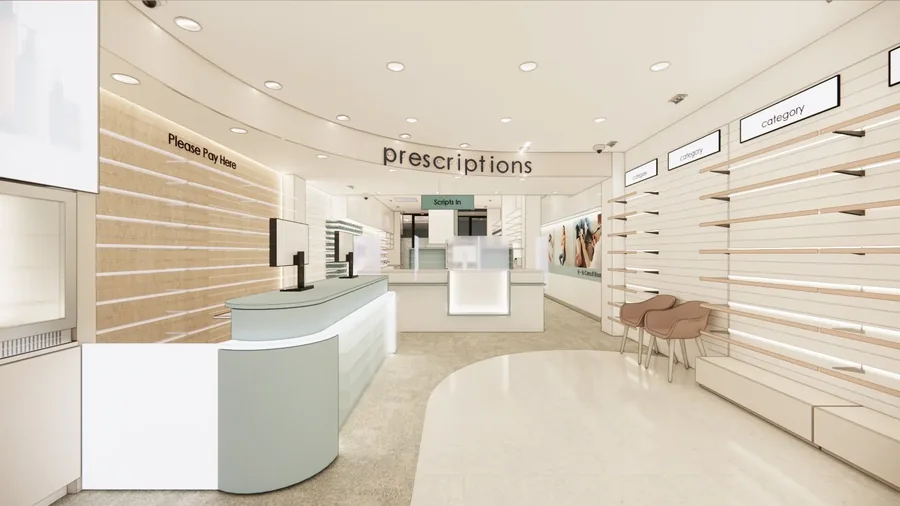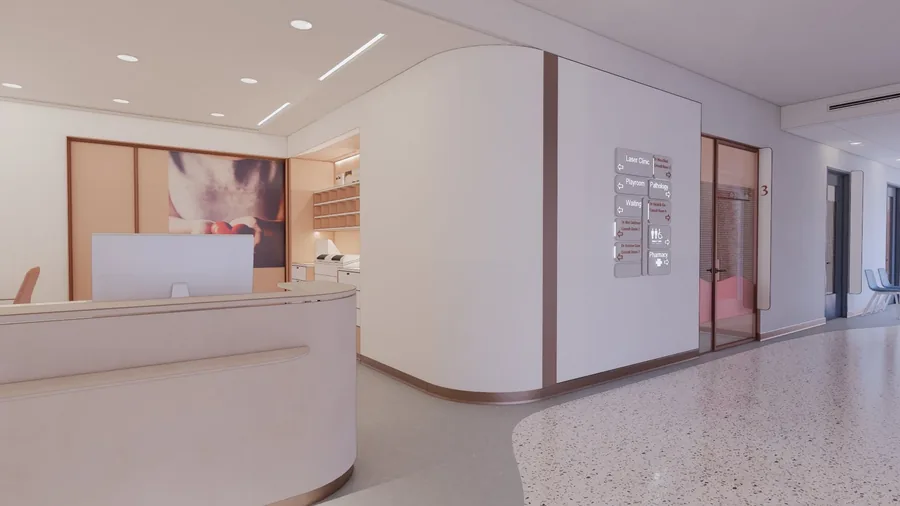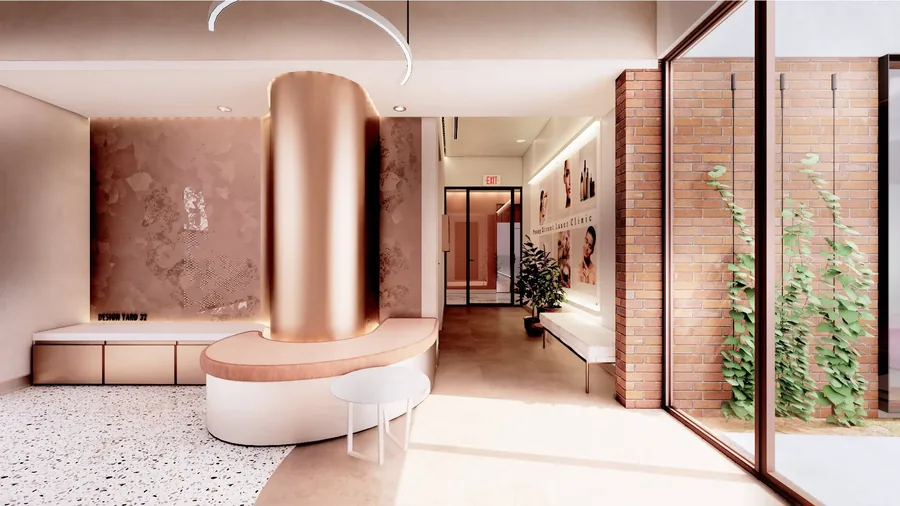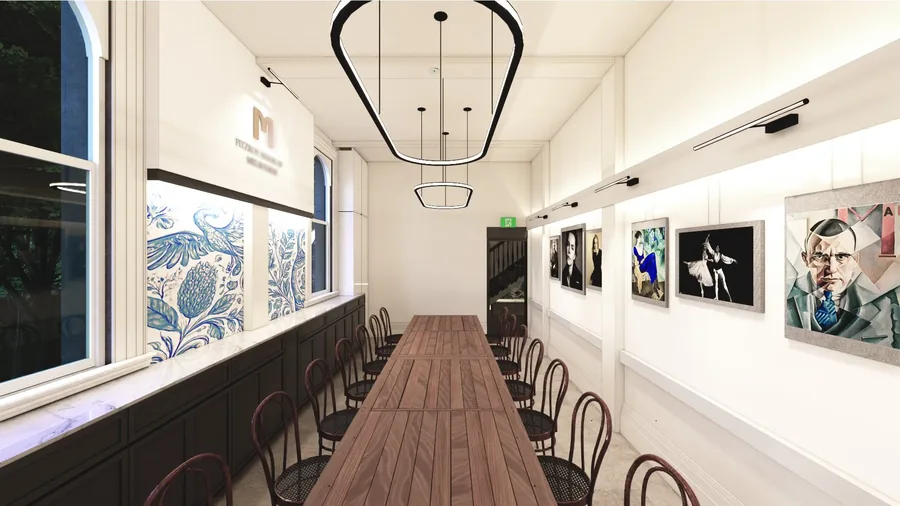
Designed Around Your Venue
Designing a hospitality space well is not simply about making it look good. It is about creating an environment that works for how the venue operates - where the kitchen feeds the floor efficiently, where customers settle in rather than pass through, and where the atmosphere reinforces the brand before a single item is ordered.
Our work covers owner-operated cafes and coffee shops, full-service restaurants, bar and licensed venue fitouts, standalone commercial kitchens, multi-purpose function and event venues, and mixed hospitality tenancies where dining, bar, and event spaces need to work together in the same footprint. We work with clients from the first brief through to construction - covering space planning, 3D visualisation, kitchen coordination, atmospheric lighting, and the full documentation set your builder needs to price and build the project accurately.
Hospitality Design Services
01
Workflow & Space Layout
02
3D Concept Design
03
Tender Package For Pricing
04
Builders Documentation
What Makes a Hospitality Venue Work
The most common problem in hospitality fitouts is that the experience was designed without accounting for how the venue actually operates. The result is a space that photographs well but creates constant friction - kitchen output that cannot reach the floor efficiently, a bar that slows service at peak, seating that fills poorly because the sightlines and atmosphere are wrong.
A well-designed hospitality space resolves operations first. The kitchen workflow needs to match the menu and service style, with clear separation between preparation, cooking, and dispatch. The floor layout needs to seat the right number of covers and allow staff to reach every table without doubling back. It also needs to create zones with different energy levels - from high-turnover positions near the entry to more settled dining toward the rear. The bar needs to be positioned to serve both the floor and walk-in trade without creating a crossing-point in the circulation path.
Every one of these decisions is made in the floor plan, before anything is built. Getting them right at this stage costs nothing. Getting them wrong and fixing them during construction is expensive.
Cafe & Coffee Shop Design
Cafe and coffee shop design centres on two things that are easy to get wrong independently and harder to reconcile together: the customer experience and the workflow behind the counter.
The customer experience is shaped by how the space feels from the moment someone enters - the counter position, the seating options, the daylight, the materials, and how busy or relaxed the atmosphere reads. The barista workflow is shaped by where the equipment sits, how far staff travel between the grinder, machine, and hand-off point, and whether the counter configuration works with two people as smoothly as it does at one.
We design cafes and coffee shops that resolve these two demands together. Counter layout, equipment coordination, seating configuration, joinery design, and shopfront are all developed as a single brief - not assembled from separate decisions. Melbourne's cafe culture is among the most demanding in the world, and the fitouts we produce reflect that standard.
Restaurant Design & Fitout
Restaurant fitout covers a wider range of decisions than most venue types - because the design needs to work for the kitchen, the floor, and the customer experience all at once, often in a building that was not purpose-built for food service.
Front-of-house design starts with the dining layout: how many covers, what mix of seating types, how the room is zoned for different group sizes and energy levels. Restaurant interior design - materials, lighting, acoustic treatment, and furniture selection - follows from the atmosphere the brief establishes, whether that is a fine-dining room, a casual neighbourhood restaurant, or a high-turnover venue that needs to be cleaned and reset quickly between sittings.
Back-of-house design works in parallel. The kitchen workflow needs to match the menu - from preparation and cooking through to plating and dispatch. The pass connects kitchen and floor, and its position determines how efficiently service runs. We coordinate commercial kitchen design and documentation as part of the restaurant fitout from the outset, rather than treating it as a separate scope.
Restaurant fitouts in Australia typically require a building permit, food safety compliance, and in some cases a development application for change of use. We identify the correct approval pathway for each project at the start of the process.
Bar & Licensed Venue Design
Bar and licensed venue design is as much about operational logic as atmosphere. The bar counter itself - its length, the back-bar configuration, the service stations - determines how many staff can work at once, how fast they can move, and what customers see and interact with from the other side.
We design bar counters, cocktail bars, wine bars, pub front bars, and beverage counters as part of full venue fitouts. The counter design integrates storage, refrigeration, glass washing, and ice positions with the aesthetic direction of the venue. Lighting at the bar is a primary atmospheric element - both for the product display and for how the space reads from across the room.
Liquor licensing requirements and the specific conditions of the venue's licence feed into the design from the briefing stage, so the layout is built around the compliance requirements from the start rather than retrofitted to meet them later.
Commercial Kitchen Design & Fitout
Commercial kitchen design is one of the most technically complex elements of any hospitality fitout. The kitchen has to support the menu, the service pace, the number of covers, and the venue's staffing model - and it has to do so within whatever footprint the tenancy allows.
We design commercial kitchen layouts for cafes, restaurants, bars, and function venues as part of the broader fitout. Kitchen planning starts with the workflow: how food moves from delivery and storage through preparation, cooking, plating, and dispatch, with clear separation between zones to meet food safety requirements. Equipment placement follows the workflow - not the other way around.
Mechanical ventilation and extraction, grease traps, hot water systems, and power provision for commercial equipment are coordinated with the relevant contractors from the outset. Food safety compliance under FSANZ and local council environmental health requirements is addressed at the design stage, so the documentation submitted for approval reflects a kitchen that will pass inspection.
The kitchen and front-of-house are ideally designed together. A kitchen that is efficient but poorly connected to the floor creates a service problem every shift.
Function & Event Venue Design
Function and event venues require a different approach to layout than a restaurant or cafe fitout. The space needs to work across different configurations - for varying group sizes, event formats, and combinations of dining, ceremony, and entertainment - without the room reading as compromised in any single use.
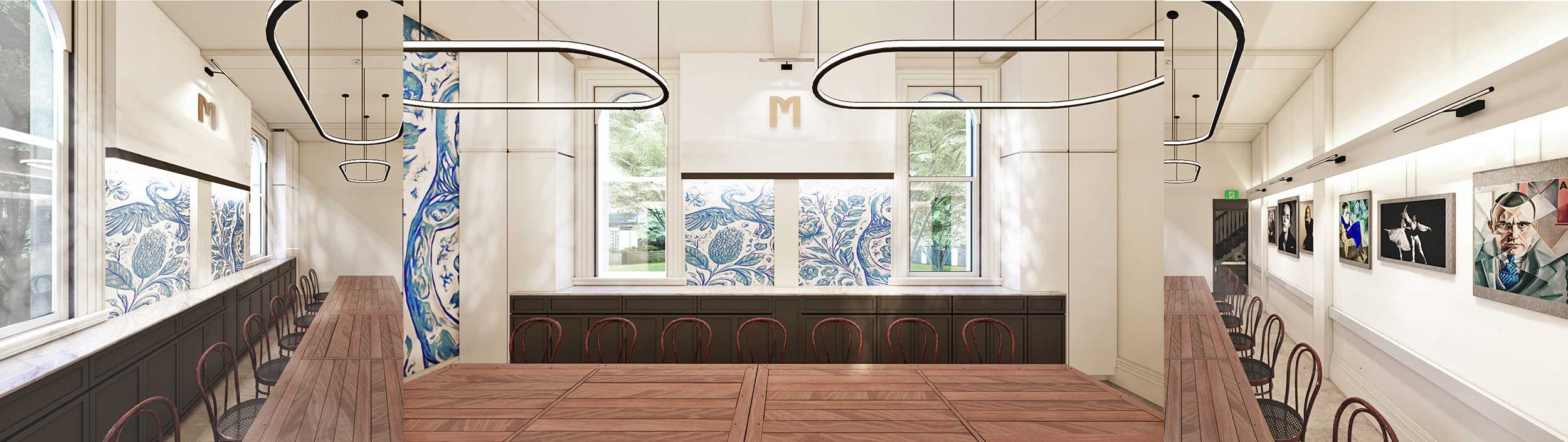
We design multi-purpose function venues, event spaces, and dining rooms intended for private hire. The design brief covers capacity planning across different configurations, acoustic and AV integration, lighting that works for formal dining, speeches, and dancing at different levels, and joinery and furniture selection that allows the room to shift between uses.
A cultural function venue combining private dining, a cocktail bar, ceremony space, and event programming in a single footprint is one of the more demanding briefs in hospitality design - and one of the most rewarding when it is resolved well. A venue that does several things well requires a design that starts with all of those uses in mind, not just one.
Lighting, Atmosphere & Services
Atmosphere in a hospitality venue is largely a lighting problem. The same space, with the same materials and furniture, reads completely differently at 100 lux and at 30 lux - and the balance of ceiling light and wall light creates a dramatically different effect again. Getting the lighting right means designing it in layers - ambient, architectural, feature, and task - and ensuring that each layer can be controlled independently as the venue moves through the day and evening.
We design layered lighting as part of every hospitality fitout: ambient light for the overall room, feature lighting that defines the bar and key visual moments, and task lighting at service positions.
Power and data for POS, EFTPOS, music systems, AV, and kitchen equipment need to be designed for how the venue actually operates. HVAC for hospitality spaces requires careful zoning - the kitchen runs hot, the dining room needs a different set point, and the bar has its own load. We coordinate HVAC requirements with your builder or mechanical contractor from the outset so there is enough capacity and the right zones are covered.
If your tenancy has access to natural light, we recommend embracing it. Not only does it improve energy efficiency and reduce electricity costs, it also brings qualities to a space that are difficult to replicate with artificial lighting. When used well, daylight can transform how a venue feels throughout the day. We help determine the right window treatments to control glare and heat while allowing the right amount of light into the interior.
The Design Process & Approvals
A hospitality fitout typically begins once you have secured a tenancy and are ready to brief the design team. We start with an initial site survey to understand the existing conditions - including kitchen exhaust provisions, service locations, structural constraints, and any heritage or planning overlays affecting the building.
The brief covers not only the aesthetic direction but also the operational model of the venue. It is important to confirm the kitchen equipment you expect to use over the next two to three years. Cooking and refrigeration equipment require specific space, power, and service connections, and adding or replacing large equipment later can be costly. The brief also considers the menu, service style, staffing levels, and the type of customer experience you want to create.
From there, the design develops through concept planning and 3D visualisation, before progressing into detailed documentation for builder pricing and approvals. Hospitality fitouts commonly require a building permit, food business registration with the local council, and grease trap approval. In some cases a planning permit is also needed for change of use or façade and signage changes. Heritage overlays may also apply. We identify the full approval pathway at the start of the project.
Construction timelines can vary significantly. A small café within an already prepared tenancy may take around 4–6 weeks on site, while a full restaurant or function venue fitout in a raw space can take 3–5 months. Pre-ordering long-lead items such as custom joinery, kitchen equipment, and specialist lighting during the design phase is one of the most effective ways to keep the programme on track.
Contact Us
Frequently Asked Questions - Hospitality Venue Design
Hospitality fitout costs vary widely depending on venue type, size, level of finish, and the complexity of kitchen and services. Cafes in prepared tenancies typically range from $2,000 to $4,500 per square metre. Full-service restaurant fitouts range from $3,000 to $6,000 per square metre. Bar and licensed venue fitouts vary depending on the complexity of the bar counter and the level of atmospheric finish. We assist clients in developing a realistic budget during the early design phase and produce detailed tender documentation so builders can price the project accurately and competitively. A hospitality designer produces the design and documentation - the spatial plans, kitchen layouts, 3D visualisations, specifications, and drawings that builders use to price and build the project. A fitout contractor manages the construction. Design Yard 32 is a design and documentation practice - we produce everything your builder needs to price and construct the fitout accurately. You can then get competitive quotes from multiple builders, compare them on equal terms, and choose who builds the project. Or, you can ask us to organise a quote for you. Yes. Commercial kitchen layout and documentation is part of our hospitality fitout service. We design the kitchen workflow and integrate it with front-of-house from the outset, then coordinate mechanical ventilation, grease trap, and services with the relevant contractors. We work with specialist kitchen equipment suppliers where required to ensure the layout suits the equipment selected. Requirements vary by state and local council, but hospitality fitouts commonly require a building permit, food business registration, grease trap approval, and in some cases a development application for change of use or a planning permit for signage and facade changes. Heritage overlays may also apply. We identify the correct approval pathway for each project at the start of the design process. Yes. We work with hospitality clients across Australia. Most of the design work is completed remotely - we work from site plans and documentation provided, or arrange a site visit where needed. We coordinate with local consultants and contractors as required throughout the project. A commercial kitchen fitout covers the design and construction of a kitchen suitable for food service - including workflow zoning, equipment layout, mechanical ventilation and extraction, grease traps, food-safe surfaces, refrigeration, and food safety compliance. At Design Yard 32, commercial kitchen design is always integrated with the front-of-house fitout brief so the kitchen is designed to work with the floor, not in isolation from it.