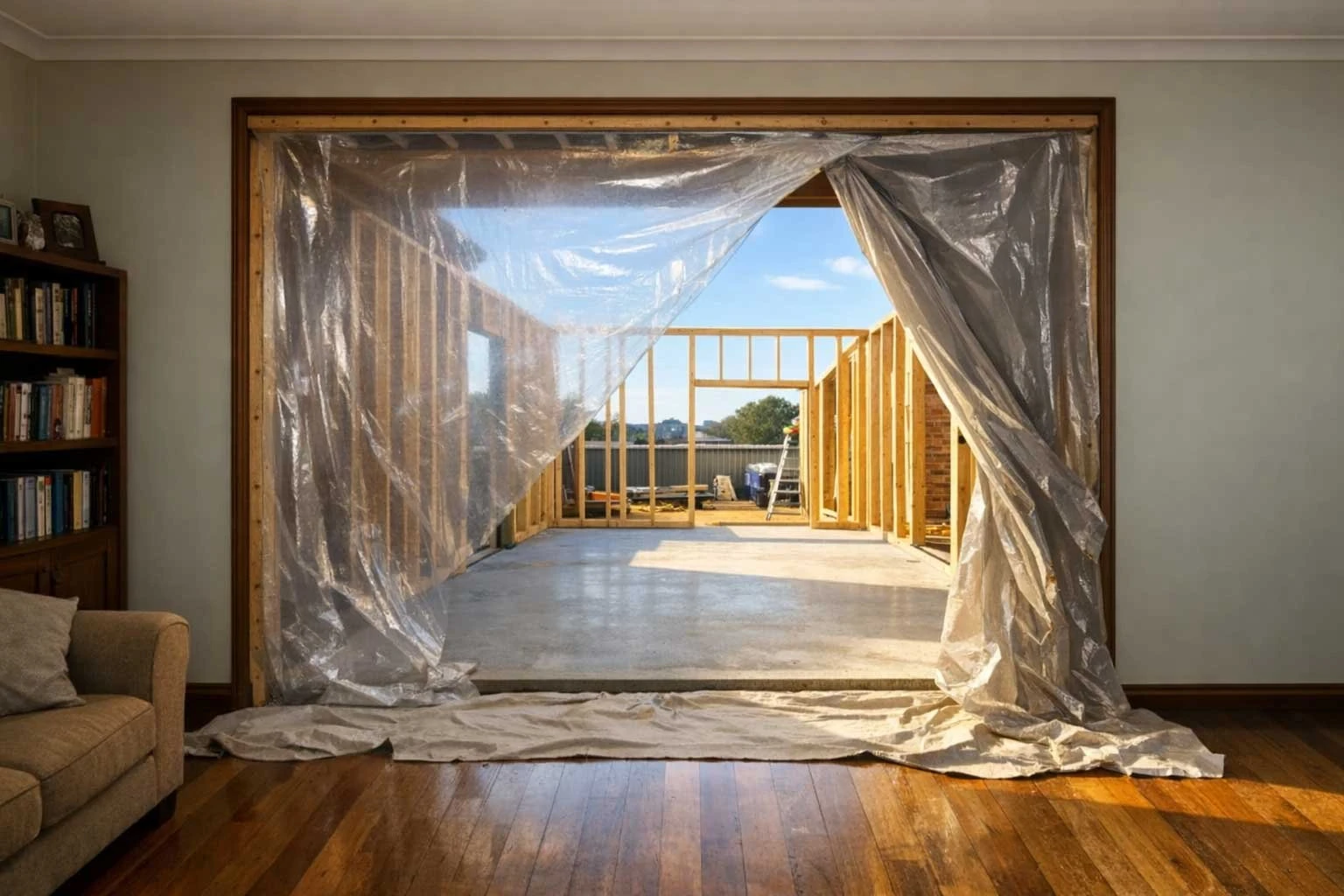
Most Melbourne homeowners start the extension process by calling a builder. It feels like the logical first step - you know roughly what you want, you want a price, and a builder seems like the right person to give you one. The problem is that without a clear design and a complete set of documentation, a builder cannot give you an accurate price. They can only give you a number based on assumptions, and different builders make very different assumptions.
This guide covers what actually happens in a home extension project before a builder sets foot on site - the design and documentation phase that determines whether your project comes in on budget, on time, and on brief. It covers single-storey extensions in detail, with a note on other project types where relevant. If you are on the Mornington Peninsula, there is a section specific to the planning considerations that apply in that area.
Why Melbourne Extension Quotes Are All Over the Place
It is common for Melbourne homeowners to get three builder quotes for the same extension brief and receive numbers that are $100,000 apart. For a detailed breakdown of what a home extension costs in Melbourne - including construction rates, professional fees, and permit costs - see home extension cost Melbourne. This is not because builders are dishonest. It is because they are all pricing something different.
When a project goes to market with only a sketch or a verbal description, every builder interprets the scope in their own way. One prices a concrete slab while another assumes a suspended floor. One includes a full kitchen relocation while another does not. One allows for a higher specification of glazing while another prices standard windows. The result is a set of figures that cannot be meaningfully compared.
The solution is documentation - a complete set of drawings, a specification, an energy report, and any engineering required. When every builder is pricing the same documented scope, the quotes become comparable. Variations during construction - the single biggest source of cost blow-out in residential projects - reduce dramatically because every decision has already been made and recorded. For a step-by-step guide to what the documentation phase involves and how the full sequence works from first designer meeting to builder appointment, see what actually happens before a builder starts your extension.
Should You Extend or Buy Instead?
The extend-versus-buy question is one of the first worth working through before committing to a design process. In Melbourne's property market, the cost of moving is higher than many people realise.
Stamp duty on a $1.5 million Melbourne property is roughly $65,000-$75,000 under Victoria's current rates. Add agent fees of around 2% ($30,000 on a $1.5M sale), conveyancing, removalists, and the cost of any work needed to make the new property liveable, and the break-even number gets surprisingly large before you have added a single square metre to your life.
Extending makes strong sense when you love your street, your school zone, or your neighbours, and when your block has room to grow. It also makes sense when the property has good bones and the change you need is about space - more living area, a better kitchen, a connection to the backyard - rather than a fundamentally different lifestyle or location.
Buying makes more sense when the block genuinely cannot accommodate what you need, when heritage or planning controls significantly restrict what can be built, or when the required extension would cost more than the uplift it would add to the property value. A feasibility study from a designer, conducted before deciding either way, is a low-cost way to answer this question with real numbers for your specific site.
Types of Single-Storey Extensions
Single-storey ground floor extensions are the most common residential project in Melbourne, and for most families the most practical way to add living area without disrupting the whole house.
Rear extensions are by far the most popular type. A rear extension typically pushes the back of the house out toward the yard, creating additional kitchen, dining, or living space that connects to outdoor areas. Done well, this type of extension can transform a closed, compartmentalised house into an open, light-filled home that works for the way Melbourne families actually live. The relationship between the indoor space and the garden or deck is often the most important design decision in the project. Our guide to house extension design decisions covers orientation, extension types, and the design choices that shape the outcome.
Side extensions work on corner blocks or on sites where the side boundary setbacks allow expansion. They can be a practical way to add a bedroom, bathroom, laundry, or study without touching the rear yard. On narrow blocks, a side extension requires careful assessment of the planning scheme to confirm whether a permit is required.
Wrap-around extensions combine a rear extension with a side component to maximise the available footprint. They require more careful planning around natural light to the original part of the house, but can deliver a significant increase in area when the block allows it.
Second storey additions are a separate project type with different structural, planning, and cost considerations - we cover those in a separate guide. Knockdown rebuilds, where the existing house is demolished and a new home is built on the same lot, are also covered separately. Both are genuinely different design exercises, not simply larger versions of a single-storey extension.
The Design and Documentation Process
A home extension in Melbourne involves a sequence of steps that happen before any physical work begins. Understanding this sequence helps set realistic expectations about timing and cost.
Site analysis comes first. Before any design work starts, a designer needs to understand the block - its dimensions, orientation, slope, existing structures, and the planning controls that apply. This includes identifying the zone and any overlays in the council's planning scheme, the required setbacks from boundaries, the maximum site coverage and building height permitted, and any features of the site that will affect the design. On the Mornington Peninsula, this analysis often involves reviewing bushfire and coastal overlays that can significantly affect what you can build and how the design has to look. An arboricultural report, land survey, or soil classification report may also be required at this stage depending on the site.
Concept design follows. Once the site analysis is complete, the designer starts drawing up the options - floor plans, elevations, and a 3D model that show you exactly how the extension will look and feel before anything is built. This is where the key decisions take shape: how the new space connects to the rest of the house, where the windows and doors go, and how the living area opens to the garden. Most clients find the 3D model the most useful part of this stage - it is much easier to make confident decisions when you can walk through your home on screen before a single brick is laid.
Tender documentation packages the design into a set of drawings and specifications that builders can price accurately. This includes dimensioned plans, a finishes and materials schedule, joinery drawings, electrical and lighting layouts, and a specification of all fixtures and fittings. The quality of this documentation directly affects the quality of builder quotes and the number of variations during construction.
The permits stage covers two separate applications - the building permit, which is required for all extensions, and the planning permit, if your project needs one. The building permit package includes a full set of drawings coordinated with a structural engineer, an energy efficiency assessment, and any other specialist reports the building surveyor requires. This stage can run at the same time as the tender documentation in some cases, but the two need to be prepared together so nothing falls out of step.
Support during construction is the final stage of the designer's involvement. Once your builder has started, the designer remains available to answer technical questions, review any proposed changes, and prepare supplementary drawings when needed. Staying involved during the build is the best way to protect the design intent through to completion.
The full design and documentation process for a single-storey extension typically takes three to six months, depending on the complexity of the project, the council's assessment timeframe if a planning permit is required, and the time needed to obtain specialist reports.
Planning Permit or Building Permit - What Does Your Extension Actually Need?
This is one of the most commonly misunderstood aspects of residential extensions in Melbourne. The two permits are entirely separate - issued by different authorities, for different purposes, at different stages of the process.
A building permit is required for virtually all residential extensions in Victoria. It is issued by a registered building surveyor (not the council) and confirms that the proposed work complies with the National Construction Code and the Building Regulations 2018. You cannot start construction without one. The Victorian Building Authority oversees building permits and the registered building surveyors who issue them.
A planning permit is a separate matter, and whether you need one depends on the council planning scheme, the zone your property is in, any overlays that apply, and the extent of the proposed works. Many single-storey extensions in standard residential zones do not require a planning permit if they meet the requirements for a ResCode assessment - Victoria's set of baseline standards for residential development. However, a planning permit is required when a design does not meet those standards, or when a planning overlay applies to the property.
Common triggers for a planning permit in Melbourne include exceeding the maximum site coverage, building above the standard wall height, being located in a heritage overlay area, or being in a neighbourhood character overlay where the council has specific design requirements. A good designer will assess the planning requirements for your specific site before any design work starts, so you know early whether the permit pathway is part of the project.
The planning permit process, when required, typically adds two to six months to the overall project timeline. This is not a reason to avoid it - many of the most rewarding extension projects require a planning permit - but it is a reason to start the design process early, and to work with someone who understands the specific requirements of your council's planning scheme.
Extensions on the Mornington Peninsula - What's Different
The Mornington Peninsula is not a difficult place to build, but it is one of the more layered planning environments in Victoria. Properties on the Peninsula can be subject to overlays that do not commonly appear in metropolitan Melbourne, and understanding which overlays apply before design work starts can save significant time and cost.
The Bushfire Management Overlay is the most significant for many Peninsula properties. Where the BMO applies, a planning permit is generally required for new dwellings and extensions, and the design must address bushfire risk under Victoria's planning and bushfire protection requirements. This typically involves a Bushfire Attack Level assessment under the relevant Australian Standard, which determines the construction specifications required - ember-resistant materials, bushfire shutters, non-combustible eaves. These requirements affect not just the permit process but the construction cost and the choice of materials, and they need to be integrated into the design from the start rather than retrofitted at the end.
Coastal properties near Port Phillip Bay, Western Port, and the Bass Strait foreshore can also be subject to coastal management overlays, which apply to land at risk from coastal inundation, erosion, or storm surge. Depending on the overlay type and the extent of the proposed works, a permit may be required and the design may need to address sea level rise projections.
Heritage overlays apply in parts of the Peninsula, particularly in and around some of the older towns. Where a heritage overlay applies, the new extension may need to respect or match the character of the existing building or the wider streetscape.
Neighbourhood character overlays are common throughout the Peninsula and set requirements around how a building looks, what materials can be used, and how far it needs to sit from the street or boundary - these can be stricter than the standard planning rules.
Knowing which overlays apply to a specific property - and understanding the planning scheme requirements that come with each - is a significant part of the design process on the Peninsula. A designer who works regularly in the area and understands the local planning scheme can identify overlay issues early and design around them, which is often faster and cheaper than discovering them mid-way through a design that needs to be revised.
What Does a Home Extension Cost in Melbourne?
Cost is almost always the first question, and it is the hardest one to answer without knowing the specifics of a project. What follows is a framework for thinking about costs rather than a fixed price guide. For a full breakdown of Melbourne home extension costs - including construction cost ranges by project type, what pushes costs higher, and how design fees fit in - see our home extension cost guide.
Construction costs for standard single-storey extensions in Melbourne currently sit in the range of $3,500 to $5,000+ per square metre for mid-specification work, depending on the complexity of the form, the level of glazing, the specification of finishes, and the location. Simple rectangular extensions with standard finishes sit at the lower end of this range. Extensions with large windows or glass doors, complex rooflines, or premium materials push toward the upper end and beyond. On the Mornington Peninsula, bushfire construction requirements (BMO-compliant materials, ember protection) can add cost beyond standard metropolitan figures.
It is important to understand what these construction costs do and do not include. They cover the builder's work - the structure, walls, roof, windows, finishes, cabinetry, and the plumbing and electrical within the new space. They do not include design and documentation fees, structural engineering, energy efficiency assessment, building surveyor fees, council planning permit fees (if required), or site works such as demolition of existing structures. These soft costs are real and need to be budgeted for separately.
A well-designed and well-documented extension will almost always cost less in total than a poorly documented one. The reason is variations - on-site changes that builders charge for at a premium. Every decision that has been made and documented before construction starts is a variation that does not happen. This is the practical reason why spending properly on design and documentation is not a luxury but a cost control measure.
Design and documentation fees vary with the scope and complexity of the project - a straightforward extension sits at a different cost point to one involving overlays, town planning, or a complex brief. Your designer should be able to outline their fee structure clearly before any work begins and provide a written proposal before the engagement starts.
What to Have Ready Before Your First Meeting
The designer leads the briefing process - it is not the client's job to arrive with a written brief. What you are preparing for is a conversation, and the most useful thing you can bring to that conversation is information about your property and clarity about what you are trying to achieve.
Practical documents to have on hand include your Certificate of Title (available from your state land titles office), any existing drawings or plans of the house if you have them, your council property information or rate notice, and any correspondence from council about previous applications or overlays. These help the designer understand the site constraints quickly.
Beyond documents, think about how your household actually uses the house today, what is not working, and what you are hoping the extension will change. How many people use the kitchen at once? Is the living area disconnected from the backyard? Do you need a separate study, a second bathroom, or just more space to breathe? The more specific your answers, the more useful the first meeting will be.
Budget is a practical matter that comes up in the first conversation. You do not need a precise number, but having a realistic sense of your range helps a designer shape the concept to what is achievable on your site and within your means. A designer who does not ask about budget in the first meeting is not doing their job properly.
Our residential design services and process page explains in detail what each stage of the project involves, from site analysis through to support during construction. If you are based on the Mornington Peninsula or surrounds, our guide to working with a local interior designer covers what to look for and why local knowledge matters in a layered planning environment.
If you are ready to start a conversation about your extension project, get in touch with us - we are based in Frankston South and work with homeowners across Melbourne and the Mornington Peninsula.