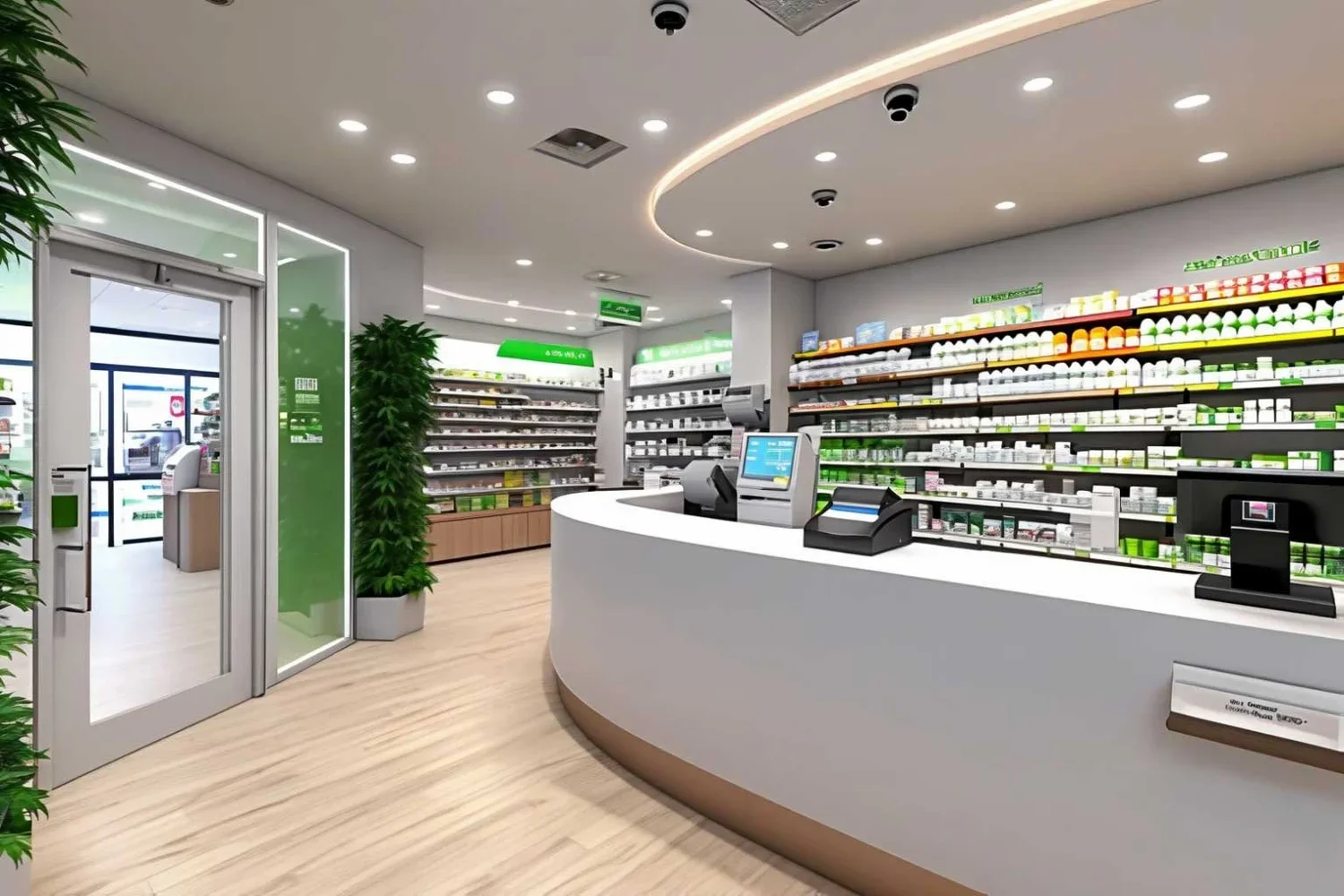
Designing a pharmacy to dispense medicinal cannabis calls for a careful balance of clinical workflow, privacy, and strict security. In Australia, medicinal cannabis is a prescription medicine dispensed through pharmacies under pathways such as the Special Access Scheme and Authorised Prescriber. The Therapeutic Goods Administration provides a practical overview of access and responsibilities on its medicinal cannabis hub. The right layout supports smooth service, reduces diversion risk, and helps your premises meet state and national expectations. Good planning also reduces rework during fitout and helps builders price accurately, which keeps projects on schedule.
This guide is written for registered pharmacists who are redesigning an existing pharmacy or planning a new tenancy to add medicinal cannabis services. It focuses on practical choices that support approvals, team efficiency, and a calm, respectful patient experience. Professional standards guide everyday practice-the Pharmacy Board of Australia’s Code of Conduct is a helpful reference for patient-centred care and professional behaviour. For state or territory-level medicines and poisons rules, start with your local health department resources such as NSW Health Pharmaceutical Services, Victoria’s medicines and poisons regulation, and Queensland Health’s licences and permits hub.
If you’d like tailored advice or a full dispensary redesign, see our service overview: Design Yard 32 - Pharmacy Fitout.
- Map patient flow from entry to consultation to handover.
- Mark S8 zones and restricted access on a single plan for all stakeholders.
- List approvals needed and align each with drawing notes early.
The Australian pharmacy model, not US-style retail “dispensaries”
Australia follows a clinical model where medicinal cannabis is prescribed and dispensed within established health frameworks rather than a consumer retail model. This has clear design implications: prescription-only workflows, controlled drug security, and private counselling areas take precedence over retail merchandising. The TGA explains access and professional responsibilities in its medicinal cannabis guidance.
Because prescription medicines cannot be promoted to the public, shopfront content and in-store communications must be conservative and service-led under the TGA’s advertising framework. This is as much a design choice as a compliance step-toning down promotional visuals near the dispensary and using neutral language keeps patient conversations discreet. In practice, this means the layout feels like a health service, not a showroom, which supports trust and consistent staff interactions.
What this means for design:
- Use zoning and subtle wayfinding to keep the clinical journey separate from general retail.
- Provide private, acoustically treated counselling rooms so conversations are not overheard.
- Keep handover supervised, with the transaction flow designed to reduce diversion risk.
- Plan short, protected paths for documentation and product movement.
- Keep records out of public view and avoid open benches for S8 handling.

Design implications at a glance:
- Clinical tone over retail display near dispensary.
- Clear line-of-sight supervision without exposing S8 storage.
- Consistent messaging that’s service-led and compliant.
Service model and patient flow, from front-of-house to handover
Clear patient flow improves confidentiality and helps your team avoid bottlenecks. Most pharmacies benefit from a discreet reception touchpoint, a private consultation room, and a supervised handover counter. Wayfinding should be simple without calling attention to the service. If queues form, create a holding point that doesn’t block retail circulation or the route to exits.
Flow aids:
- Simple, repeatable steps from check-in to consult to handover.
- Low-distraction transitions and minimal public backtracking.
- Seating options that don’t obstruct circulation.
Discreet reception and triage
Place a low-profile check-in point away from the busiest retail paths, with modest screening or offset geometry to soften sound. Allow space for SAS-B or Authorised Prescriber status checks, identity verification, and quick scanning of documents without exposing records. Ensure there’s seating for people with mobility challenges and a clear route to private rooms.
The National Construction Code sets baseline expectations for access, circulation widths, counter heights, and egress (see ABCB - NCC). Accessibility obligations are also informed by the Disability Discrimination Act and practical design guidance from the Australian Human Rights Commission. If your tenancy has pinch points, adjust fixture depths or counter shapes to maintain safe widths and turning circles.
Reception checklist:
- Low-voice area or acoustic panel near check-in.
- Secure, screen-facing scanner location for documents.
- Visual privacy from main retail lanes.
Private consultation rooms
Provide seating for the pharmacist and patient, with space for a carer when needed. Include a small bench for clinical demonstration where clinically appropriate, a wall-mounted screen for education, and secure access to systems. Acoustic privacy matters: door seals, insulated walls, and ceiling treatments help keep conversations private, consistent with the Australian Privacy Principles and the Communicating for Safety Standard. Consider dimmable lighting for patient comfort and a modest storage niche for consumables so the room can be reset quickly between consults.
Include in room:
- Seated counselling (two chairs minimum) and wheelchair turning space.
- Bench for clinical demonstration and wipes/cleaning storage.
- Door vision panel with privacy film and effective acoustic seals.
Handover and payment points
Design the counter to protect conversation privacy while allowing staff to supervise the area. Use surfaces and layouts that prevent pass-through of stock into public zones before the handover is complete. Keep S8 storage concealed from public sightlines while placing it near dispensary benches to minimise handling. If multiple handover points are used, match counter detailing and scripting so staff can rotate without confusion.
Handover quick tips:
- Offset POS from counselling zone to reduce overheard details.
- Provide a discreet shelf for patient belongings during handover.
- Maintain clear view corridors from dispensary to counter.
Schedule 8 storage and premises security
Medicinal cannabis products can be Schedule 8 depending on formulation and jurisdiction, which brings strict expectations for premises, records, and access controls. Common design themes are consistent: a compliant safe or vault, restricted staff access, and dependable monitoring. Professional standards and responsibilities are outlined by the Pharmacy Board’s standards framework (see the Code of Conduct). For premises and S8 specifics, consult your state health department’s public guidance, such as NSW Health Pharmaceutical Services, Victoria’s medicines and poisons regulation, or Queensland Health’s licences and permits.
S8 design anchors:
- Define restricted zones and access points on plans.
- Specify audit trails (digital or paper) and storage segregation.
- Align CCTV coverage with S8 handling locations.
S8 safe or vault specification and location
Anchor the safe to structure, size it for growth, and keep a clear working zone for audits. Position it in a staff-only area that is close to dispensing benches yet away from public routes. Segregate S8 from non-controlled stock; don’t co-mingle on open shelves. If the authority provides an inspection checklist, map each item to drawing notes early and leave practical access for annual checks.
For examples of premises oversight and inspection style, see resources from the Victorian Pharmacy Authority. Similar principles apply across jurisdictions even though detail can vary, so confirm requirements with your state before ordering joinery or safes.
Safe location pointers:
- Avoid adjacency to heat, damp, or external glazing.
- Ensure floor structure supports loaded safe weight.
- Provide lighting and bench space for reconciliations.
Restricted access and staffing controls
Define who has access, when, and under what conditions. Key or credential control should create an auditable trail, with procedures that are easy to follow during busy periods. After-hours access should be narrow and clearly documented. Consider dual verification for specific actions and keep a printed quick guide near staff areas to support training.
Access control aids:
- Credential expiry reminders and key custody logs.
- Visitor escort policy for contractors and inspectors.
- Escalation steps for discrepancies.
CCTV, alarms, duress and lighting
CCTV should cover entries to secure areas and the handover zone, with retention periods that match your risk assessment and tenancy rules. Monitored alarms and staff duress points add another layer of protection. Provide lighting that supports reliable camera images and safe supervision. Coordinate power, data, and cable paths with joinery so devices can’t be disabled by simply unplugging them or removing a panel.
Coverage guide:
- Avoid glare on lenses; choose matte finishes nearby.
- Time-sync cameras with POS timestamps.
- Protect devices from casual unplugging or tampering.
Security zoning and back-of-house planning
Thoughtful zoning reduces risk, supports accurate dispensing, and keeps movement efficient. A simple zoning diagram in your staff area helps everyone understand routes and responsibilities. Keep the public path short and predictable; keep the staff path safe, direct, and separate from delivery logistics.
Zoning quick list:
- Public, semi-restricted, restricted clearly marked.
- No-through routes from back-of-house to retail.
- Sanitary storage separate from clinical product zones.
Clean back-of-house circulation
Aim for unidirectional flow from receipt to quarantine to storage to dispensing to handover. Provide staging shelves for checked and unchecked scripts, with clear labels and physical separation. Avoid crossover between returns and incoming stock, even briefly. If space allows, create a staff corridor that bypasses retail zones so you’re not moving sensitive items past customers.
Circulation boosters:
- Floor markings or subtle trims to cue paths.
- Shelf labelling with large, legible tags.
- Anti-slip surfaces near receiving points.
Receiving, quarantine and returns
Provide a receiving bench near back-of-house entry and dedicated quarantine shelving for items pending checks. A small returns area reduces the chance of mix-ups, and a routine for packaging waste keeps controlled products out of sight and reach. Keep labels, markers, and forms within arm’s reach to support consistent practice during busy periods, and consider photographing damaged returns before processing to add a simple verification step.
Receiving essentials:
- Lockable cage or cabinet for deliveries awaiting check-in.
- Waste route that avoids patient areas.
- Clear “hold” signage for unresolved discrepancies.
Odour control and environmental settings
Where odour is a concern in your tenancy context, specify sealed cabinetry and local extraction to maintain comfort without complicating security. HVAC zoning can support comfort in consultation rooms and stable conditions in the dispensary. For airborne contaminant considerations in workplaces, refer to Safe Work Australia’s guidance on exposure standards for airborne contaminants. During commissioning, simple smoke tests help confirm that air movement doesn’t travel from public to controlled zones.
Environment checklist:
- Keep returns and waste away from intake grilles.
- Verify pressure relationships at doorways.
- Service filters without entering restricted zones.
Workflow integration for SAS-B and Authorised Prescriber
Medicinal cannabis dispensing often involves approvals and documentation that differ from standard repeats. A dedicated workspace keeps this orderly and reduces interruptions. The TGA outlines access pathways and professional responsibilities in its medicinal cannabis hub, which is a useful reference when designing paperwork and data handling steps.
Workflow foundations:
- Standard operating procedure visible at the station.
- Colour-coded files or dashboard flags for status.
- End-of-day reconciliation checklist.
Paperwork, verification and data handling
Allocate a bench zone for approvals, prescriber instructions, identity checks, and scanning. Keep original documents and follow-up records in lockable cabinetry or controlled drawers, and adopt a simple naming convention for digital files so multiple staff can work seamlessly across shifts. A visual dashboard (physical or digital) that lists pending items helps the team track next actions.
Paperwork essentials:
- “Awaiting approval,” “Ready to dispense,” “Follow-up due” buckets.
- Date stamps and initials to show progression.
- Secure shred route for sensitive waste.
Digital workflow design
Place scanners, secure terminals, and label printers so they don’t obstruct core dispensing tasks. Angle screens away from public sightlines and use privacy filters where needed. If telehealth is used for counselling, check audio privacy and the background of the camera view. Map each device to a power and data point on your drawings to avoid ad hoc cabling later.
Digital setup tips:
- Cable management to avoid trip hazards.
- Screen hoods or filters in public-adjacent zones.
- UPS (battery backup) for critical terminals.
Signage and advertising compliance for prescription medicines
Prescription medicines cannot be advertised to the public, which steers the tone of shopfronts and in-store messages. Under the TGA’s advertising framework, keep content neutral and service-led; avoid product claims, inducements, or symptom-led invitations. In practice, a simple “Professional services available-please speak with our team” is usually sufficient. Train staff with a short scripted response for common queries so communications remain consistent and compliant.
Design tips within the rules:
- Use discreet wayfinding to direct patients who already have prescriptions or referrals.
- Keep digital displays locked to approved content and away from the shopfront glazing.
- Avoid product imagery near the dispensary; use calming, clinical finishes instead.
- Keep in-store posters focused on services and health literacy, not products.
Retail zoning vs dispensary: keeping clinical pathways clear
Zoning helps the retail journey and clinical activity coexist without conflict. Where space is tight, low-height fixtures near the dispensary preserve sightlines for supervision. Choose durable, easy-to-clean finishes and avoid sharp corners on benches in narrow aisles.
Store planning that reduces conflict
Provide a short, discreet route from reception to the consultation room. Prevent crossings between general retail queues and patients seeking clinical services by using subtle barriers or angle changes in counters. If you add queue rails, integrate shallow accessory shelves that don’t slow movement. Keep mobility aid turning circles clear at decision points.
Fixture pointers:
- Lower merchandising near clinical paths.
- Rounded bench edges in tight zones.
- Anti-collision mirrors where sightlines are limited.
Sightlines for supervision and safety
Use glazing, controlled counter heights, and fixture orientation so the dispensary team can observe public areas without revealing secure storage. Don’t position the S8 safe in any public line of sight. When you need tall fixtures for retail density, orient them perpendicular to staff sightlines instead of placing them as solid walls.
Supervision aids:
- Internal windows from dispensary to floor.
- Task lighting that avoids glare for CCTV.
- Staff perch point for intermittent observation.
New tenancy planning and approvals
New tenancies typically require landlord consent, pharmacy premises approvals, and building/certifier sign-off. Early coordination avoids redraws and keeps momentum. Store the current versions of each authority’s requirements in your project folder and annotate drawings with explicit callouts so reviewers can see how each requirement is addressed.
Authority submissions and documentation
Pharmacy premises expectations are set by pharmacy authorities or health departments, so check jurisdiction-specific requirements early. For example, see the Victorian Pharmacy Authority for premises oversight in Victoria and NSW Health Pharmaceutical Services for NSW. Most projects also require building approvals and shopping centre design manual compliance for shopfronts and signage. Keep a tracker that lists each approval condition and the drawing or specification where it’s addressed.
Approvals map:
- Authority premises submission (plans, schedules, security notes).
- Building/certifier review (NCC compliance highlights).
- Landlord design manual sign-off (shopfront, signage, services).
Drawing sets and coordination
Prepare coordinated packages covering plans, joinery, power and data, mechanical/ventilation, security, fire egress, and accessibility. This helps with approvals under the National Construction Code and reduces pricing disputes during tender. If you are working through layout options before commissioning your drawing set, our guide to cannabis dispensary floor plans covers the five main archetypes for small pharmacies - zoning, adjacencies, and staff routes for each. If you must keep trading, include staging diagrams so tenants and builders share a clear sequence. Add a brief commissioning plan so tests (e.g., alarms, CCTV coverage, acoustic checks) are priced from the start.
Coordination aids:
- One-line security diagram with device IDs.
- Reflected ceiling plan showing CCTV cones and lighting.
- Services matrix (who supplies what, when).
For a view of how we structure deliverables and coordination, see Design Yard 32 - Commercial Services & Process.
Accessibility, safety and base compliance
Your fitout must meet NCC requirements for egress, exit signage, and services coordination, and provide accessible paths, counters, and consultation rooms under the DDA. For the spatial design detail - counter heights, aisle widths, turning circles, and inclusive fitout choices - see our companion post on cannabis dispensary interior design.
Buildability and staging during a live renovation
Phase the works to keep core dispensing running and move S8 inventory with clear chain-of-custody records at each transition - photograph each stage to document compliance. For broader staging logistics including temporary counter layouts, hoardings, quiet hours coordination, and toolbox meeting cadence, see our companion post on cannabis dispensary interior design.
Technology, records and inventory integrity
Digital systems should make records accurate and protect patient information. Keep terminals and scanners in staff-only positions, angle screens away from public sightlines, and consider privacy filters. Use time-synchronised CCTV with sensible retention periods based on risk and landlord rules. Store controlled documents and registers in secure yet reachable locations so the process holds up during busy times. For an overview of state premises and records expectations, see NSW Health Pharmaceutical Services (or your local authority’s equivalent).
Security hygiene:
- Unique logins and least-privilege access.
- Regular backups and test restores.
- Locked ports and cable anchors in public-adjacent zones.
How a specialist design partner reduces risk
Specialist design support helps translate regulatory expectations into a practical layout. Clear drawings, service coordination, and early authority engagement help reviewers find key items quickly and keep builders quoting like-for-like. We work nationally and prepare premises submission packages that match state rules and centre management manuals-see Design Yard 32 - Pharmacy Fitout for an outline. Our process includes staged deliverables and consultant coordination that supports approvals and builder pricing; an overview is available on our Commercial Services & Process page.
What you gain:
- A coordinated, approval-ready drawing set.
- A clear staging plan to trade safely through works.
- A practical, secure layout that supports team workflow.
For the spatial planning, lighting, materials, and design decisions that shape how the dispensary looks and feels to patients and staff, see our companion post: Cannabis Dispensary Interior Design: Layout, Lighting & Merchandising.