Pharmacy Retail Design
Find out how your retail floor design can support sales, customer experience, and your pharmacy's identity - layout, lighting, shelving, and shopfront all covered.
Pharmacy Retail Design & Front of Shop
Prescription services underpin pharmacy revenue, but a well-designed Front of Shop (FOS) attracts customers and converts visits into retail opportunity. While the dispensary is the operational heart, the retail environment is where experience, brand identity, and purchasing behaviour come together to drive revenue and build loyalty in a competitive market.
At Design Yard 32, our retail pharmacy design approach considers layout strategy, product flow, lighting, finishes, and shopfront - creating environments that work commercially and feel genuinely welcoming.
Pharmacy Retail Layout Planning
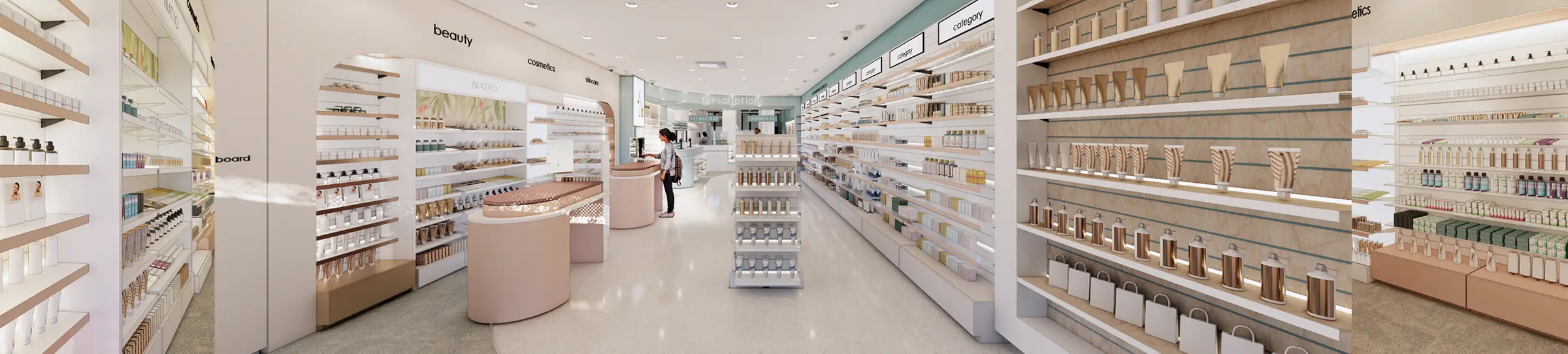
Australian community pharmacies offer one of the broadest product ranges in retail - from prescription and healthcare products to beauty, wellness, and lifestyle goods. Understanding this variety is key when planning a pharmacy fitout and merchandising strategy.
Common categories include OTC medicines, vitamins and supplements, dermocosmetics, beauty and personal care, medical devices, home diagnostics, first aid, baby care, continence, weight management, sexual health, mobility aids, seasonal lines, natural health, and gifts.
Effective layout begins with clear customer flow and zoning. OTC, wellness, seasonal, and impulse areas should guide purchasing while keeping script collection simple. A well-designed shopfront and entry help customers settle, reduce overwhelm, and increase engagement.
Best-Practice Pharmacy Merchandising
Strong merchandising relies on smart category adjacencies, eye-level placement of high-margin products, and refreshed feature displays. Schedule 3 medicines requiring pharmacist advice remain in view of the pharmacist, while Schedule 4 and 8 medicines are secured behind the dispensary counter.
The front zone grabs attention with promotions and high-impact displays, while discreet categories like continence and sexual health sit deeper in the store. Checkout areas support impulse buying, and signage or digital screens guide customers while reinforcing brand identity.
Pharmacy Brand Identity in Retail Design
Integrating brand identity through colour, materials, signage, and consistent design builds trust and credibility. Thoughtful shelving supports both merchandising goals and operational efficiency, with display systems tailored to each zone.

Modern Pharmacy Shelving Systems
Choosing the right shelving system is a key decision in pharmacy retail design, directly influencing merchandising flexibility, customer experience, and the overall look of the space. The most common solutions in Australian pharmacies are steel gondola shelving, slatwall panels, and wall strip systems.
Each system suits a different retail strategy, and many successful pharmacies combine more than one approach. For a detailed comparison of shelving system types, load capacities, and cost considerations, visit our Pharmacy Shelving page.
Pharmacy Lighting Design
When a pharmacy is fitted with ceiling downlights only, it is illuminated - but lighting design principles have not been applied. Uniform lighting spread evenly across the ceiling often creates visual fatigue: spaces feel either flat and dull or overly bright, without clear focus or visual hierarchy. This is one reason some stores naturally invite customers inside while others feel tiring to shop in after only a short time.
Effective lighting design guides movement through the pharmacy, highlights merchandise attractively, and creates a comfortable, positive customer experience. A successful strategy combines general ceiling illumination with targeted accent lighting that draws attention to key retail zones, services, and feature displays.
Beyond aesthetics, pharmacy lighting must also comply with Australian energy-efficiency requirements under the National Construction Code (NCC). Lighting design must balance visual impact with prescribed maximum lighting power densities for the building classification. Separating display lighting from general ceiling lighting allows better control of energy use while maintaining strong retail presentation.
At Design Yard 32, lighting design is approached as part of the overall pharmacy experience - ensuring compliance, efficient energy performance, and an environment that feels welcoming rather than overwhelming.
Pharmacy Retail Finishes
Your dispensary is a highly regulated space, but your retail floor offers genuine opportunity to express your pharmacy's identity and brand. Design possibilities are limited only by imagination and budget.
Pharmacy Retail Flooring
The most common choice for pharmacy retail flooring is vinyl plank, typically installed over an existing concrete slab. It is cost-effective, easy to replace, and available in a wide range of colours and textures. For a more premium feel, options include polished concrete or floor tiles. Commercial carpet tiles are also popular - soft underfoot, easy to replace, and cost-effective, though less straightforward to sanitise. Always consider slip resistance, durability, and cleanability when selecting a retail floor finish.
Pharmacy Retail Walls and Wall Finishes
Standard commercial fitout wall construction generally meets pharmacy and NCC requirements for a typical ground-floor pharmacy with an exit door to the street. In this scenario, wall finishes are rarely restricted. In upper-level tenancies or locations deeper inside a building, fire performance requirements may be more stringent, and certain Group Number classifications can apply. At Design Yard 32, we guide the selection of wall finishes that are visually appealing and fully compliant, balancing aesthetics, hygiene, and safety - whether for a community pharmacy, an internal hospital pharmacy, or a compounding facility
Pharmacy Retail Ceilings
Acoustic tile ceilings are well-suited to dispensaries for sound control and easy access to services above. For high-end retail spaces, plasterboard ceilings upgrade the overall profile of the pharmacy. Thoughtfully placed bulkheads or dropped ceiling sections help define functional retail zones, conceal services and structural elements, particularly in larger tenancies. Premium ceiling tile options are also available, combining contemporary finishes with functional performance.
Pharmacy Retail Counters and POS
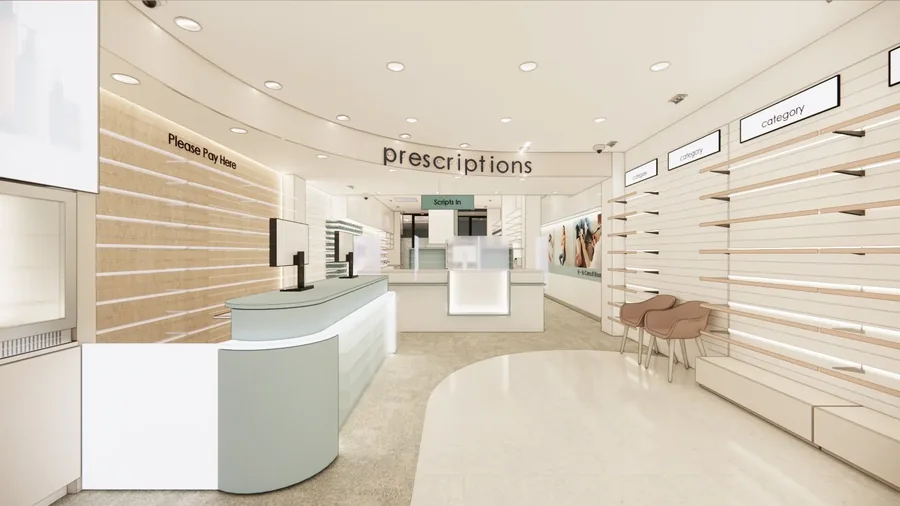
Custom product displays and Point of Sale (POS) counters are central to the customer experience. Tills and Front Counters endure heavy daily wear from bags, prams, and wheelchairs, so material choice, construction quality, and finish durability are critical. At Design Yard 32, we have developed extensive knowledge of materials and finishes suited to pharmacy retail environments, drawing on curated selections that avoid compliance issues, minimise delays, and deliver lasting visual impact.
Curves or Straight Lines
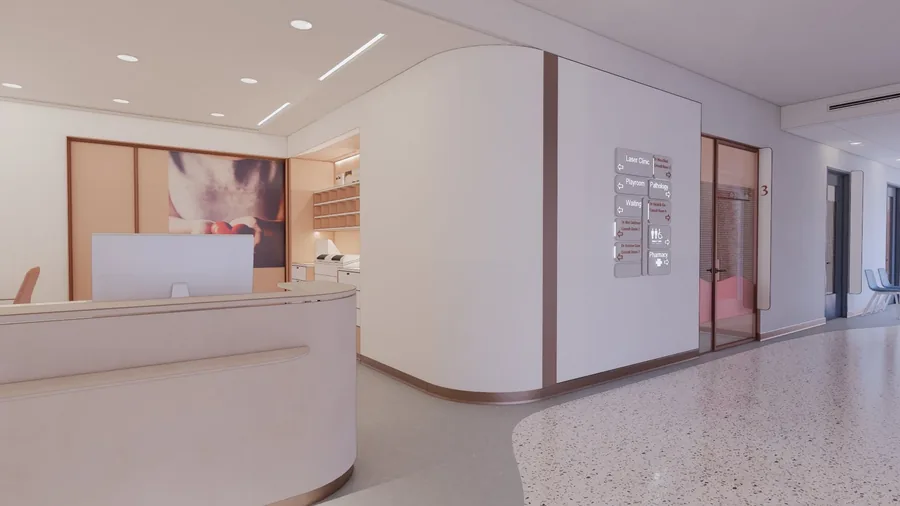
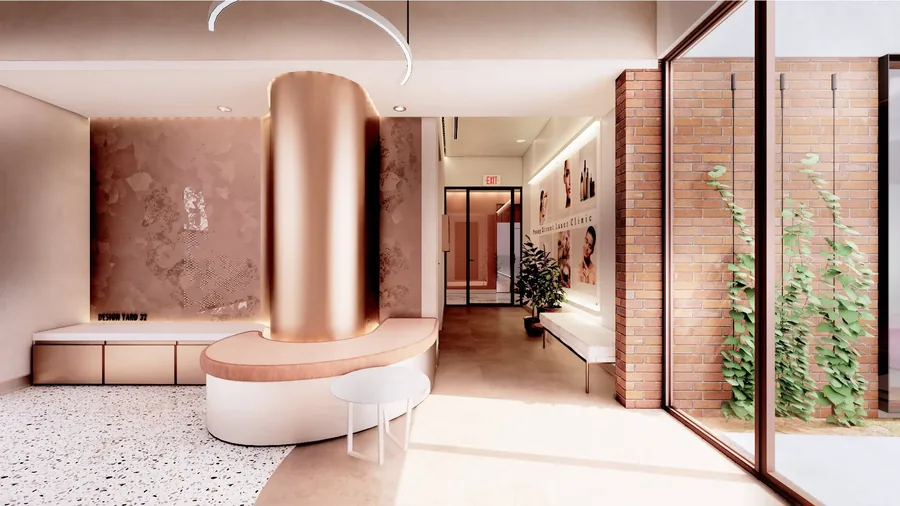
The trend for curves, arches, and organic shapes has been active since around 2019 and currently remains strong. Designers are moving away from rigid, box-like geometry and embracing fluid lines and soft profiles. Rounded walls, arched openings, and gently curved joinery make spaces feel more welcoming and human-centred.
Curves appear in everything from arched ceilings to sculptural cabinetry and soft-edged furnishings. They support calm, fluid movement and create a sense of warmth against the hard lines encountered daily. Adding curves can occasionally create unused areas and does not pack space as efficiently as straight lines. Overuse can also make a space feel themed rather than cohesive, so balance with structured elements is important.
Square forms and straight-line interiors remain popular for spaces that prioritise efficiency and clarity. They maximise usable space, create a sense of order, and convey a modern, minimalist aesthetic. They can feel rigid if not softened with textures, furniture, or subtle design details.
Many designers now combine straight lines with gentle curves to balance structure and comfort. Design Yard 32 works with clients to carefully select the best look and feel for each space - creating pharmacy interiors that are functional, welcoming, and visually engaging.
Pharmacy Shopfront Design
Shopfront, Exterior Design & Brand Integration
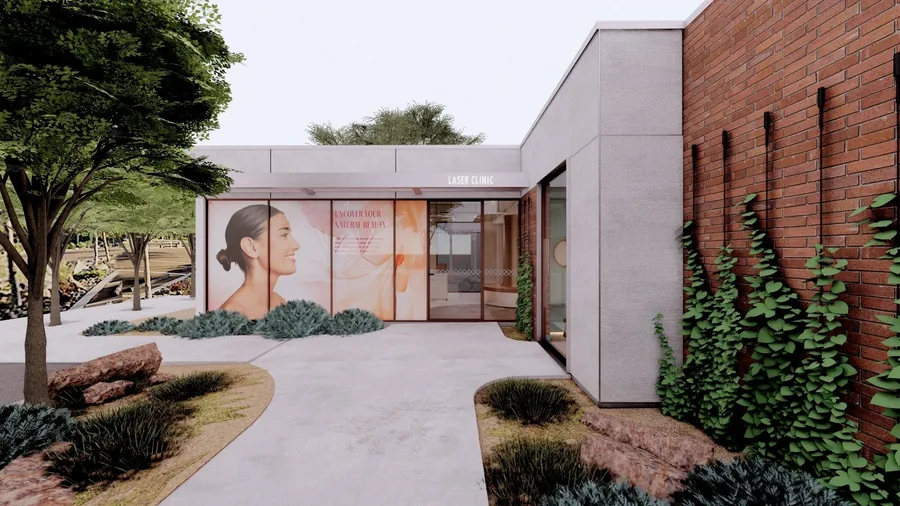
Your shopfront is often the moment of decision - where passing customers quickly judge whether to step inside. Signage and well-chosen graphics are the most powerful elements on your façade. Whether the goal is attention-grabbing, elegant, or to convey a trusted healthcare hub, we help determine the best solution for your pharmacy. We carefully consider surrounding buildings and neighbouring businesses to ensure your design stands out without feeling overwhelming or out of place.
At Design Yard 32, we collaborate with experienced signage consultants to guide your choices - from materials to theatrical lighting, all designed to draw customers in.
As experienced professionals, we ensure shopfront modifications align with local council regulations. We can manage town planning submissions, liaise with authorities, and handle approvals for facade alterations and overhead signage. When possible, we also identify solutions to avoid permits without compromising compliance or design quality.
We are experienced professionals who make sure shopfront modifications align with local council regulations. We lodge town planning submissions and communicate with local authorities when council approval is required for facade alterations or overhead signage.
Areas of Expertise
Contact Us
Frequently Asked Questions - Pharmacy Retail Design
-
Pharmacy retail design operates within a specific regulatory framework that standard retail does not. Schedule 3, 4, and 8 medicine placement is governed by pharmacy authority guidelines, with strict rules about pharmacist visibility and product accessibility. Retail zoning must also support safe script collection and patient counselling workflows. Within these constraints, there is significant opportunity for creative, commercial retail design - but it requires a designer with pharmacy-specific knowledge to achieve it effectively.
-
The most effective pharmacy retail layouts begin with customer flow. Entry zones feature high-impact, high-margin products. Core health and OTC categories are positioned mid-floor to draw customers deeper into the store. Discreet categories such as continence and sexual health are placed at the back. Script collection is a natural anchor that drives customer movement through the retail floor. We design the layout to guide that movement and maximise dwell time and basket size at every step.
-
The best shelving system depends on your brand positioning, product range, and budget. Steel gondola shelving offers high display density and flexibility at a competitive cost. Slatwall panels provide a premium, contemporary look suited to pharmacies with a strong brand identity. Wall strip shelving offers creative, bespoke display solutions for feature walls and lighter stock. Many successful pharmacies use a combination of all three. Visit our Pharmacy Shelving page for a full comparison.
-
Lighting has a direct impact on customer behaviour, dwell time, and product perception. Poorly lit pharmacies feel uninviting and difficult to navigate. Well-designed lighting draws attention to key products, creates a sense of quality, and makes the pharmacy more pleasant to browse. We design pharmacy lighting as an integrated part of the retail environment, balancing energy efficiency requirements under the NCC with the commercial goals of the fitout.
-
It depends on the nature and extent of the changes. Signage alterations, glazing modifications, facade treatments, and overhead signage frequently require a building permit or local council planning approval. Requirements vary by council and state. We assess what approvals are required for your specific shopfront project and manage the submission process, ensuring works proceed without regulatory delay.
-
A well-designed retail environment increases sales through several mechanisms: strategic product placement drives impulse purchasing; well-planned traffic flow increases dwell time and exposure to more categories; effective feature displays and seasonal zones capture attention at key moments; and a professional, welcoming environment builds customer trust and repeat visits. The retail floor is one of the most powerful commercial levers available to a pharmacy owner - and design is the tool that unlocks it.