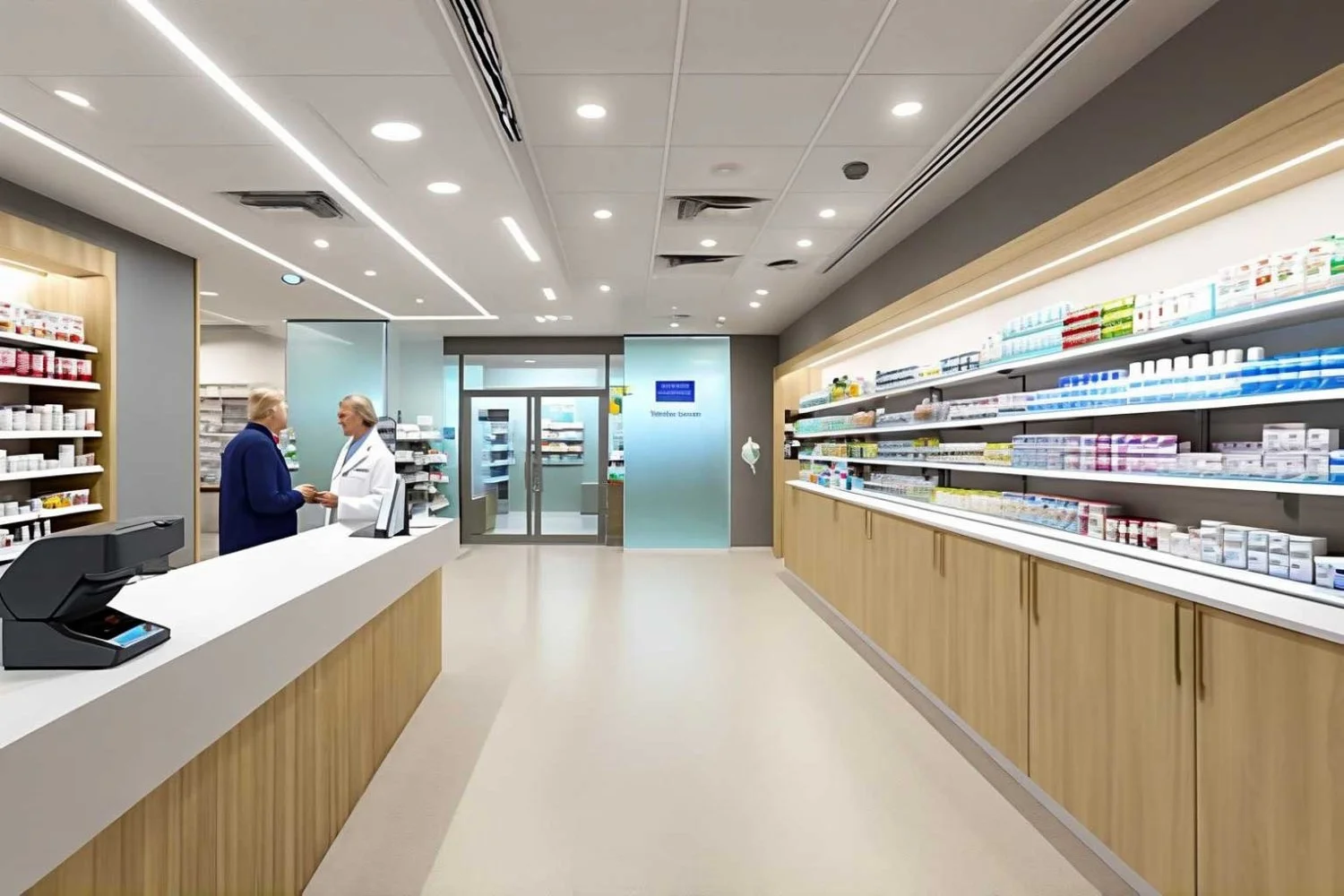
Designing a dispensary inside an Australian community pharmacy is about safe workflow, patient privacy and clear compliance. Medicinal cannabis supply sits within the prescription model explained by the Therapeutic Goods Administration, which shapes how pharmacies deliver services and keep records (TGA medicinal cannabis). Promotion of prescription medicines to the public is restricted, so shopfront wording and in-store signs should be neutral and service-led (TGA advertising). Your base build also needs to meet the National Construction Code and support accessibility consistent with national guidance (ABCB NCC, AHRC Disability Rights).
This checklist is for pharmacy owners and pharmacists planning a stand-alone pharmacy or a tenancy inside a medical centre. It includes practical notes for S8 security, consultation privacy and workflow, with a focus on Victoria and Queensland. If you are shaping a concept and want early input on layout and approvals, see how we approach pharmacy fitout planning at Design Yard 32 - Pharmacy Fitout.
Approvals roadmap (Australia-wide with VIC and QLD notes)
Before you draw joinery or select finishes, map the approvals you’ll need and the order they typically run. Getting this right saves redraws, shortens reviews and keeps everyone aligned on what “compliant” looks like. For a deeper look at the compliance layers behind those approvals - VPA premises registration, NCC building classification, and Pharmacy Board standards - see our guide to pharmacy design compliance in Australia. This section explains who approves what, how state guidance influences design notes, and where national rules apply.
Define your approvals path early
- Map the order for your project: pharmacy premises expectations, building approval or certifier review under the National Construction Code, landlord or medical-centre owner consent, and any planning or signage permissions (ABCB NCC).
- Check whether your state expects a formal premises submission or a health department interface for controlled medicines. Turn those expectations into clear notes on your plans (Victorian Pharmacy Authority, Queensland Health licences and permits).
- Review prescription advertising rules before you finalise any shopfront or in-store messaging (TGA advertising).
Pharmacy premises expectations (VIC and QLD focus)
Prescription model and advertising rules
- The TGA frames medicinal cannabis as a prescription service. Design for private consultation, supervised handover and neutral wayfinding (TGA medicinal cannabis).
- Keep all public messaging measured and service-led to meet national advertising rules (TGA advertising).
Building approvals and certifier coordination
- The National Construction Code sets requirements for fire, egress, services and accessibility. Show these clearly in your drawings and schedules (ABCB NCC).
- Accessibility affects door widths, turning space and counter heights. Use national guidance to inform practical choices (AHRC Disability Rights).

Compliance pillars that shape design
A strong dispensary is built on a few non-negotiables: safe custody of controlled medicines, private conversations, and safe, inclusive access. Designing with these in mind early makes approvals smoother and operations easier. The points below translate common expectations into simple, inspectable choices.
Controlled medicines (S8) and secure storage
Opioid replacement therapy dispensing points
Pharmacies that dispense opioid replacement therapy need a supervised dosing point, which sits outside the scope of a standard dispensary design. The dosing point must let the pharmacist observe the patient throughout consumption while keeping that patient out of sight of other customers - and it must stay physically secure and dignified at the same time. Resolving that balance in a real tenancy is a design decision: sightlines, partitioning, patient flow and waste handling all have to be settled in the drawings before the application goes to the state health department. Schedule 8 storage for these medicines also goes beyond a standard lockable cabinet. State rules require a fixed, compliant drug safe in a staff-only zone, separate from general stock, with documented access control.
Privacy and consultation rooms
- Provide seated counselling, acoustic treatment and visual privacy. Use door seals and insulated partitions. Lighting should support calm conversations without glare (ACSQHC Communicating for Safety).
- Handle personal information in line with the Australian Privacy Principles. Angle screens away from public view and keep records in staff-only areas (OAIC Australian Privacy Principles).
Access, inclusion and safe egress
- Ensure an accessible path to the dispensary, consultation room and handover counter. Provide suitable counter reach ranges and turning areas (AHRC Disability Rights).
- Keep exits clear and signed. Show egress logic on your plans for certifier review under the NCC (ABCB NCC).
Records, data and CCTV considerations
- Place terminals so screens are not visible to the public. Use privacy filters where counters are close to waiting areas. Assign logins per staff member to support accountability (OAIC Australian Privacy Principles).
- Cover access routes and handover zones with cameras. Do not film inside secure storage. Set retention based on risk and insurer needs. If air quality or odour is a concern, check national guidance on workplace airborne contaminants (Safe Work Australia airborne contaminants).
Space planning checklist (stand-alone or medical-centre tenancy)
Good layouts make busy days feel calm. Think about how patients arrive, where they talk, and how staff move stock without crossing public areas. The following room-by-room tips help you lock in the essentials before you consider finishes.
Dispensary workroom and benching
- Provide checking benches with good task lighting, power and data at hand, and tidy cable routes. Label shelves for active stock, repeats and returns.
- Keep S8 reconciliations on a bench out of public view. Leave space for audits without blocking daily work.
- If automation is being considered now or staged for later, note the spatial and services provisions in your documentation before joinery is committed - robot footprint and clearance zones, dedicated electrical supply, slab load capacity, and ceiling height are decisions that are cost-effective at design stage and expensive to retrofit.
Private consultation room
Reception, handover and POS
- Use a discreet reception point to triage arrivals and check paperwork. Keep handover visible to staff but shaped to reduce overheard conversations. Angle screens away from public sightlines and secure printer and cable runs.
Back-of-house, receiving and waste
- Place a receiving bench near staff entry, provide quarantine shelves and set a waste route that avoids public areas. Keep a staff-only path for controlled stock movement.
Refrigeration and storage conditions
- Keep temperature-sensitive stock stable and monitored. Use dedicated circuits for critical fridges and plan simple backup strategies.
Security design checklist (practical and inspectable)
Security works best when it’s simple to operate and easy to check. Place devices where they capture what matters, hide what could be misused, and keep the record trail tidy. These steps help during inspections and day-to-day work.
S8 safe or vault location and access
CCTV, alarms, duress and access control
- Cover access points and handover areas with clear camera views. Use a monitored alarm and a duress button at the counter. Hide cable and power paths so devices cannot be unplugged easily. Keep a device schedule and a simple security diagram for tender.
Sightlines and glazing
- Use internal glazing so staff can supervise public areas without revealing secure storage. Set lighting to avoid reflections that block camera views or sightlines.
Services and engineering (base-build essentials)
Behind the scenes, services make or break daily operations. Focus on safe power and data, quiet and comfortable rooms, easy-clean surfaces, and visible life-safety devices. Clear drawings help certifiers and builders deliver what you expect.
Electrical and data
- Label outlets and data points at benches. Keep circuits for critical gear separate so a single trip does not stop work. Note device counts in the tender pack.
- Where automation is planned - now or in a future stage - include the dedicated circuit capacity, conduit runs, and data connections in the tender pack so they are built in from the start rather than retrofitted.
HVAC and acoustics
- Zone HVAC so the consultation room is comfortable and quiet. Avoid drafts on work surfaces. If needed, consult national guidance on airborne contaminants for practical design choices (Safe Work Australia airborne contaminants).
Plumbing, hand basins and infection-control surfaces
- Place hand basins where they are useful and specify sealed, easy-clean materials so daily cleaning is simple.
Fire, detection, exit signage and emergency lighting
- Show device locations and sightlines to exit signs on drawings. Provide maintenance access. A clear reflected ceiling plan helps both certifiers and builders (ABCB NCC).
Documentation you will need for approvals and quoting
Clear paperwork equals faster reviews and tighter quotes. Give reviewers what they look for and give builders details they can price without guesswork. This section lists the essentials to include in your pack.
Drawing pack (what reviewers and builders expect)
- Floor plans with zoning and security notes, reflected ceiling and lighting plans, power and data diagrams, security schematics, joinery details and schedules. Make egress paths legible for the building review (ABCB NCC).
Specifications and schedules
- Provide a finishes schedule, hardware sets, security device list, services counts and cleaning notes for key materials. This makes quotes clearer and shows hygiene thinking to reviewers.
Submission attachments and checklists
- Prepare a short matrix that links each premise or health requirement to a drawing reference. Note privacy features for the consultation room and secure storage for the dispensary. For VIC and QLD, cite the public guidance you followed in your cover letter (Victorian Pharmacy Authority, Queensland Health licences and permits). If you are still working through layout options at this stage, our cannabis dispensary floor plan guide covers the main archetypes and how each one handles patient flow, security sightlines, and approval documentation differently.
Tip: if you want a structured pathway from drawings to submissions and tender, see how we coordinate deliverables and consultants in our commercial services and process overview.
Tendering, builder selection and inclusions control
Good tendering avoids surprises. The goal is apples-to-apples pricing and a builder who understands health premises. These ideas help you issue a clear scope and choose partners who can hand over cleanly.
Issue a clear, comparable scope
- Provide a short inclusions and exclusions list, device counts for security and life-safety, a commissioning checklist and basic assumptions. Ask bidders how they will protect trading if staging is required.
Evaluating capability and handover discipline
- Prefer builders with healthcare or dispensary experience and a clean handover pack with as-builts, commissioning reports and warranties. This helps you operate safely from day one.
Build staging and trading during works
Renovations can happen while trading if your staging is simple and safe. Keep stages short, maintain staff oversight of public areas, and plan clear moves for controlled stock. Communication keeps everyone comfortable.
Phasing plan and temporary counters
- Short stages let you keep trading while areas are renewed. Use secure temporary counters and a controlled plan for moving S8 stock. Keep staff oversight of public areas at all times.
Communications, hoardings and after-hours
- Let staff and patients know about layout changes. In medical-centre settings, agree on shared access and after-hours rules. Where centres require after-hours work, group noisy tasks to fewer sessions.
Testing, commissioning and pre-opening checks
Final checks prevent first-week headaches. Test security, check privacy, walk the exits, and rehearse basics with your team. Capture results and file them with your as-builts so you can find them later.
Security function checks
- Test alarms, camera coverage, recording, retention and duress triggers. Make sure cameras see access routes and handover areas, not inside secure storage.
Clinical function checks
Egress, signage and emergency systems
- Walk exits, check signs, test emergency lighting and alarms. Fix small items before opening. Keep device positions aligned with approved plans (ABCB NCC).
Staff induction and SOP alignment
- Rehearse opening week steps, emergency actions and escalation contacts. Confirm how controlled stock moves and how records are made and filed.
Opening day and first-month tasks
The first month is about tidy records and small tweaks. Keep your paperwork together, schedule routine checks, and close small issues fast. This builds good habits and makes inspections straightforward.
As-built documentation, warranties and maintenance
- File as-builts and commissioning records where managers can find them. Track maintenance for security and life-safety devices so checks are not missed.
Feedback loop and small adjustments
- Ask staff about queues, acoustics and handover privacy. Fix minor problems while the builder is still inside their defects period.
Victoria and Queensland: state-specific notes
Each state has its own style and emphasis. Knowing what reviewers look for makes your submission easier to read and approve. These short notes highlight practical focus areas.
Victoria (VPA and controlled medicines)
Queensland (Medicines and Poisons regulatory environment)
- Use the licences and permits hub to ground safe location, custody routines and records. Bring these choices into your plan and builder brief so the fitout supports practical compliance from day one (Queensland Health licences and permits).
Medical-centre tenancies and shopping-centre differences
Not every pharmacy sits on a main street. If you’re in a medical centre or a shopping centre, there are extra rules to consider. The aim is the same: safe, compliant, simple to run.
Medical-centre tenancy nuances
- Shared entries and reception can change wayfinding and cleaning. Confirm what is base building and what is tenant scope, then show those assumptions on your plans.
Shopping-centre note
- Centre manuals, hold points and after-hours rules add steps and time. Clean, early submissions help you keep moving even with short work windows.
Timeline overview (from concept to opening)
Timelines vary, but the sequence rarely does: early checks, design, approvals, tender, build, test, open. Resolve safety and access items on drawings early to avoid revisiting them later. Clear notes save time for everyone (ABCB NCC, AHRC Disability Rights).
Common pitfalls and quick fixes
Small gaps can cause big delays. Most are simple to fix if you catch them early. Use the points below as a last pass before you submit or start work.
How a specialist partner keeps you on track
A coordinated approach ties compliance, layout and construction into one plan from the start. We prepare drawing packs and submission notes so builders can price apples-to-apples and reviewers can see how the plan meets their focus. If you want scope clarity for tender and a clean submission trail, see how we stage milestones in our commercial services and process guide. When you are ready to turn this checklist into a working plan for your premises, explore our approach to pharmacy fitouts at Design Yard 32 - Pharmacy Fitout.